The First Gallery Below Canal
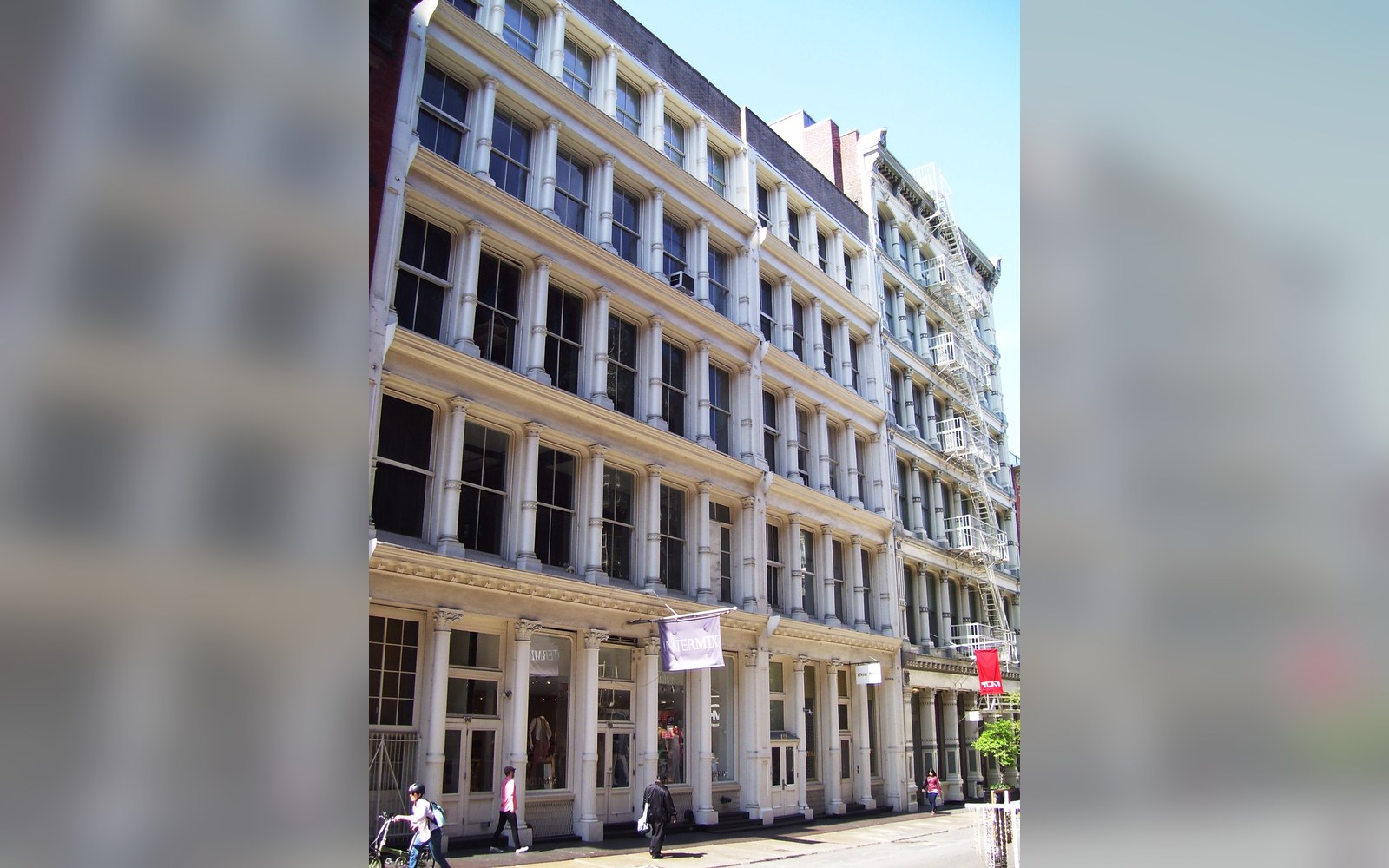
Paula Cooper’s gallery at 96–98 Prince Street, opened 1968: the first commercial gallery in SoHo.
Photo: 96-104 Prince Street · Wikimedia Commons
How 96–98 Prince Street became the address that unlocked SoHo
Paula Cooper opened her gallery at 96–98 Prince Street in October 1968, and almost nothing about the moment resembled what a gallery opening looked like then. There was no champagne, no collector preview, no advertising in Arts Magazine. There was a benefit for the Student Mobilization Committee to End the War in Vietnam, a dollar admission, and roughly fifty artists who each contributed a work to fill the walls. The proceeds went to the antiwar movement. The art stayed up for a month.
That opening was a political act before it was a commercial one, and the distinction mattered enormously — not just as biography but as urban history. Cooper had worked for Ivan Karp and for Park Place, the artist cooperative on West Broadway, before she and a group of artist friends pooled their resources to lease a raw industrial floor in a former manufacturing building on Prince Street. The address was north of Canal and south of Houston, in a neighbourhood with no galleries, no museum branches, no foot traffic to speak of and no name yet. The neighbourhood would not acquire the name SoHo — South of Houston — in common usage for another few years.
Cast iron was built for goods, which is why it suited work that had to come in through a freight door.
Photo: wal 172619 / Pexels
A dollar, a floor, a neighbourhood without a name
The choice of location was not accidental, and it was not purely idealistic. Rents in the cast-iron district below Houston were a fraction of what spaces on 57th Street commanded. The buildings had been erected for light manufacturing in the mid-nineteenth century — their ornamental cast-iron facades, generous floor plates and tall ceilings made them structurally ideal for large-format work at a moment when painters and sculptors were making things that no longer fit in conventional gallery rooms or uptown apartments. The practical argument and the political argument arrived at the same address.
What Cooper and her collaborators understood, and what the benefit show demonstrated in miniature, was that the primary function of the space was to be a commons. The benefit's admission dollar was nominal; the real point was that the gallery opened as a community event, not a commercial announcement. Artists who contributed work to that first show included Carl Andre, whose floor pieces were already challenging the vertical conventions of gallery display, and others from the circle around Park Place and the downtown studios. The dollar-a-work concession framed participation as collective rather than hierarchical — a deliberate inversion of the star-dealer system that had defined 57th Street since the postwar years, when Betty Parsons and Sidney Janis built markets for Abstract Expressionism from the ninth and upper floors of midtown buildings.
- October 1968Paula Cooper opens at 96–98 Prince Street; benefit show for Student Mobilization Committee to End the War in Vietnam
- 1971Artist-in-residence zoning adopted for SoHo; Leo Castelli moves into 420 West Broadway
- Early 1980sEast Village gallery scene replicates the SoHo storefront model
- 1994–96Chelsea galleries emerge; Matthew Marks leads, Cooper follows
- 1996Paula Cooper Gallery moves from Prince Street to 534 West 21st Street, Chelsea
What the template required
By 1969, the move had registered. Other galleries began to appear on the blocks immediately surrounding Prince Street, and by 1971, when Leo Castelli moved his gallery into 420 West Broadway, sharing a building with Sonnabend, André Emmerich and John Weber, SoHo had a critical mass. But Castelli's arrival — the moment most accounts treat as SoHo's coronation — came three years after Cooper's. The district's logic was already established by the time its most famous name arrived: oversized floors, industrial freight elevators for moving large-scale work, an atmosphere of productive proximity among artists and dealers, and rents low enough that a gallery could survive on a program built around conviction rather than the secondary-market safety net that sustained uptown dealers.
The template Cooper established at 96–98 Prince Street had several interlocking components that proved durable. First, the gallery occupied a ground-floor or near-ground-floor space in a converted loft building rather than a suite in a commercial tower — which meant the street read as a gallery street rather than as an office building with a gallery inside. Second, the program was artist-driven from the start; Cooper has said consistently that her artists' needs shaped the space's configuration, not the other way around. Third, the gallery operated without the inherited obligations of a European-inventory model: no back room of old masters to liquidate, no obligation to the estate traditions that constrained older dealers. The program was contemporary and it was American, even as it engaged ideas arriving from Europe.
The choice of location was not accidental, and it was not purely idealistic.
The 1971 artist-in-residence zoning change formalised what was already happening on the ground: it recognised artists' live-work occupancy of industrial buildings, which stabilised the building stock that galleries were increasingly depending on. Without that legal framework, the economics of SoHo would have remained permanently precarious — landlords could have cleared out tenants once the neighbourhood's desirability became apparent. Instead, the legislation bought the district roughly a decade of relative stability, during which the gallery concentration deepened and the neighbourhood acquired international recognition.
The reach of one decision
Cooper's gallery moved in 1996 to West 21st Street in Chelsea, part of the broader exodus from SoHo that gathered speed across the middle of that decade as rents inflated and the retail character of the neighbourhood changed. By then, the Prince Street building had passed through other hands and other programs. But the consequences of the 1968 opening were not cancelled by the move; they had already propagated outward through every subsequent decision about where in New York City a gallery might reasonably locate.
The East Village moment of the early 1980s — Patti Astor's Fun Gallery on East 10th Street, International With Monument on East 7th, dozens of storefronts converting to exhibition space — was structurally identical to what Cooper had done: artists and their allies taking cheap space in an undervalued neighbourhood and betting that the work would draw an audience. The Chelsea move in the 1990s, led by Matthew Marks and then Cooper herself, applied the same logic to the former garage and warehouse blocks west of Tenth Avenue. Red Hook and Bushwick, decades later, would replay it again.
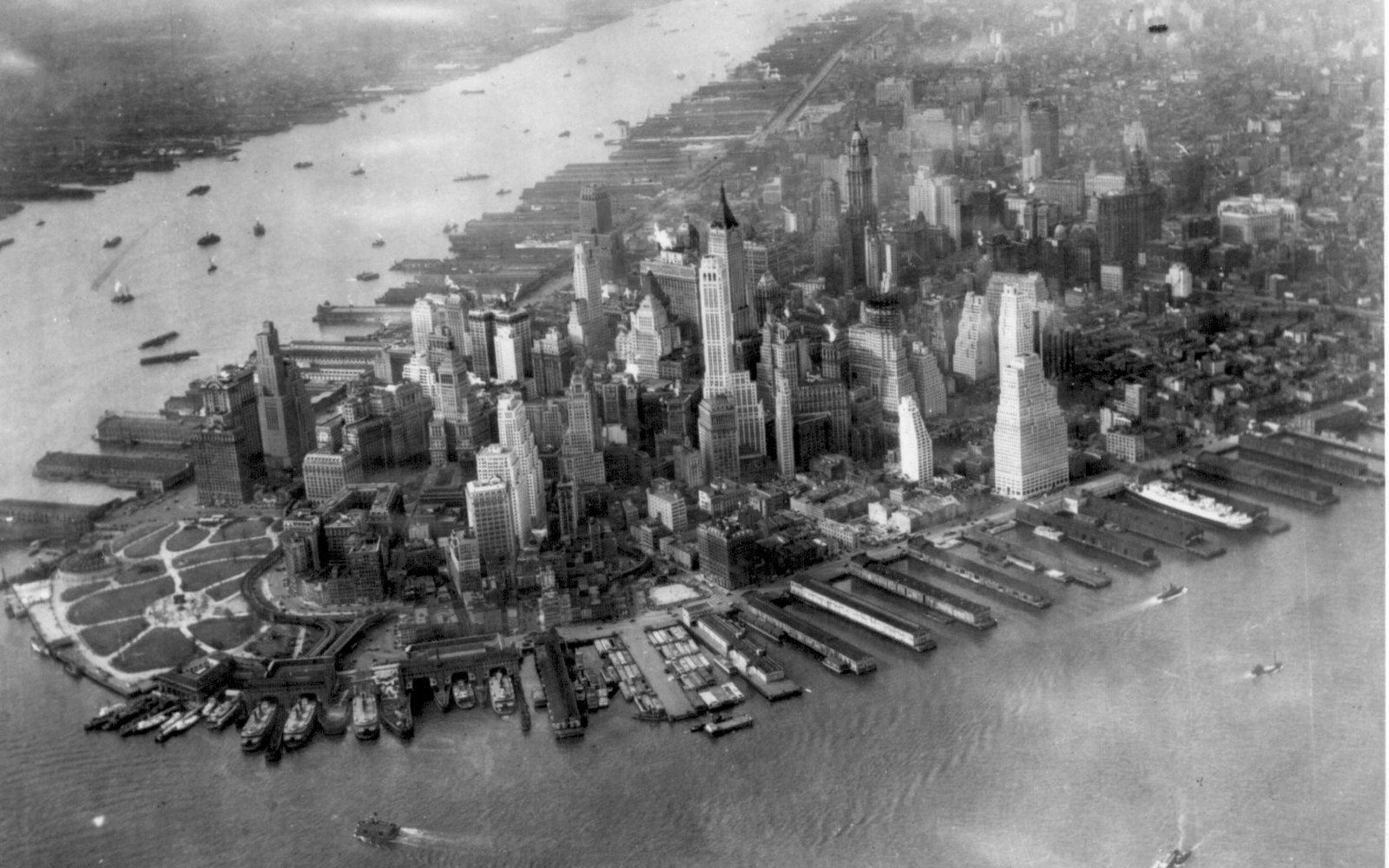
Elsewhere in SoHo: 420 West Broadway, 1971 — Castelli, Sonnabend, Emmerich and Weber, one gallery to a floor. 420 West Broadway and the Building That Made SoHo
Photo: Manhattan 1931 · Wikimedia Commons
What Cooper demonstrated in October 1968 was not merely that a gallery could survive below Canal Street. She demonstrated that the gallery district is not a fixed address but a recurring argument — that art institutions follow cheap space and underused buildings, and that the first person willing to sign a lease in a neighbourhood without a gallery history becomes, retroactively, the template for everyone who follows. The Paula Cooper Gallery's move to Chelsea in 1996 was a second founding of the same kind, and it was possible because the first had already proved the model.
The one address that made the argument stick was 96–98 Prince Street, in October 1968, when the admission was a dollar and the cause was the end of a war.