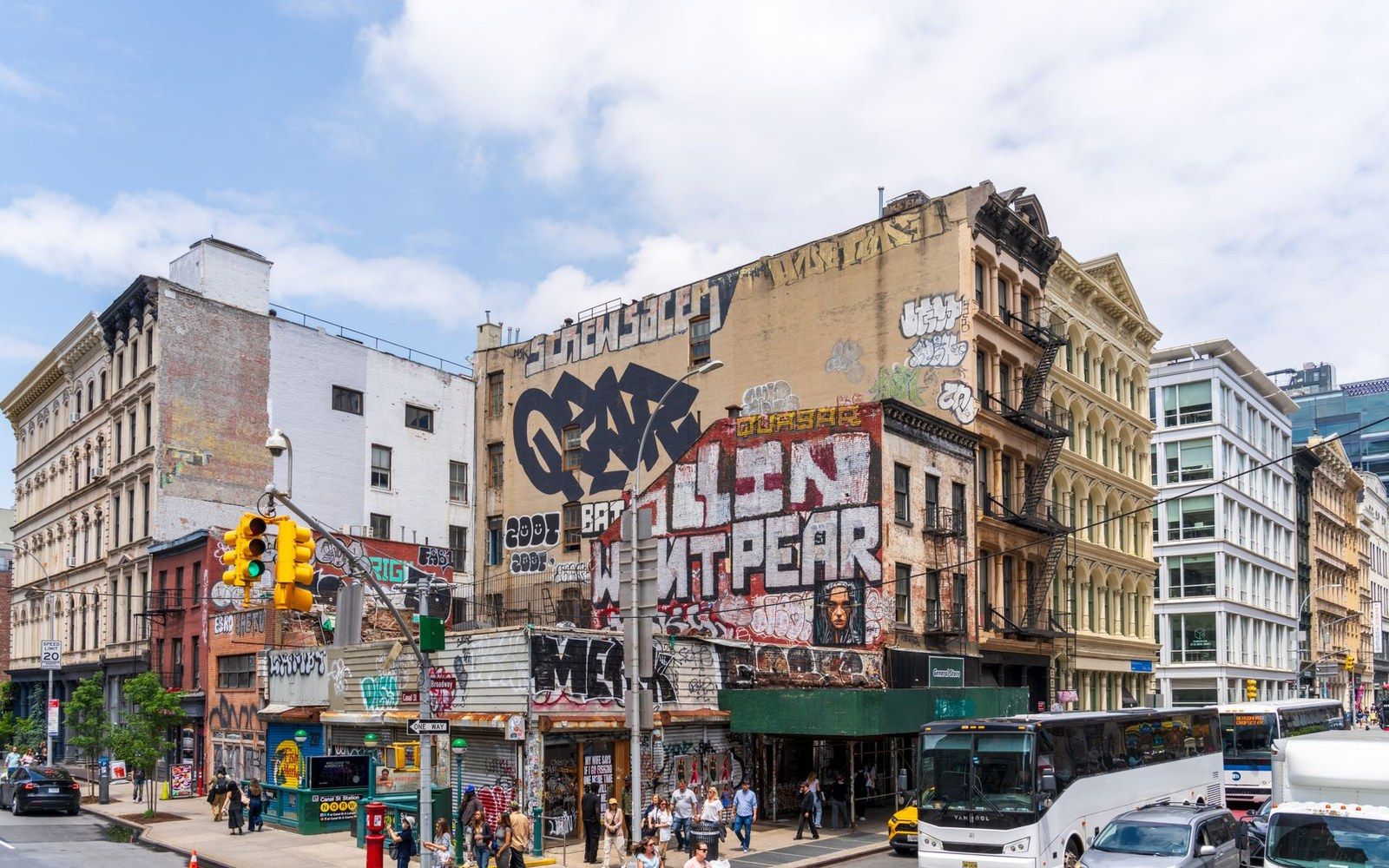
420 West Broadway and the Building That Made SoHo
How one cast-iron building on West Broadway concentrated four galleries on four floors and turned a manufacturing district into the world's most consequential art address
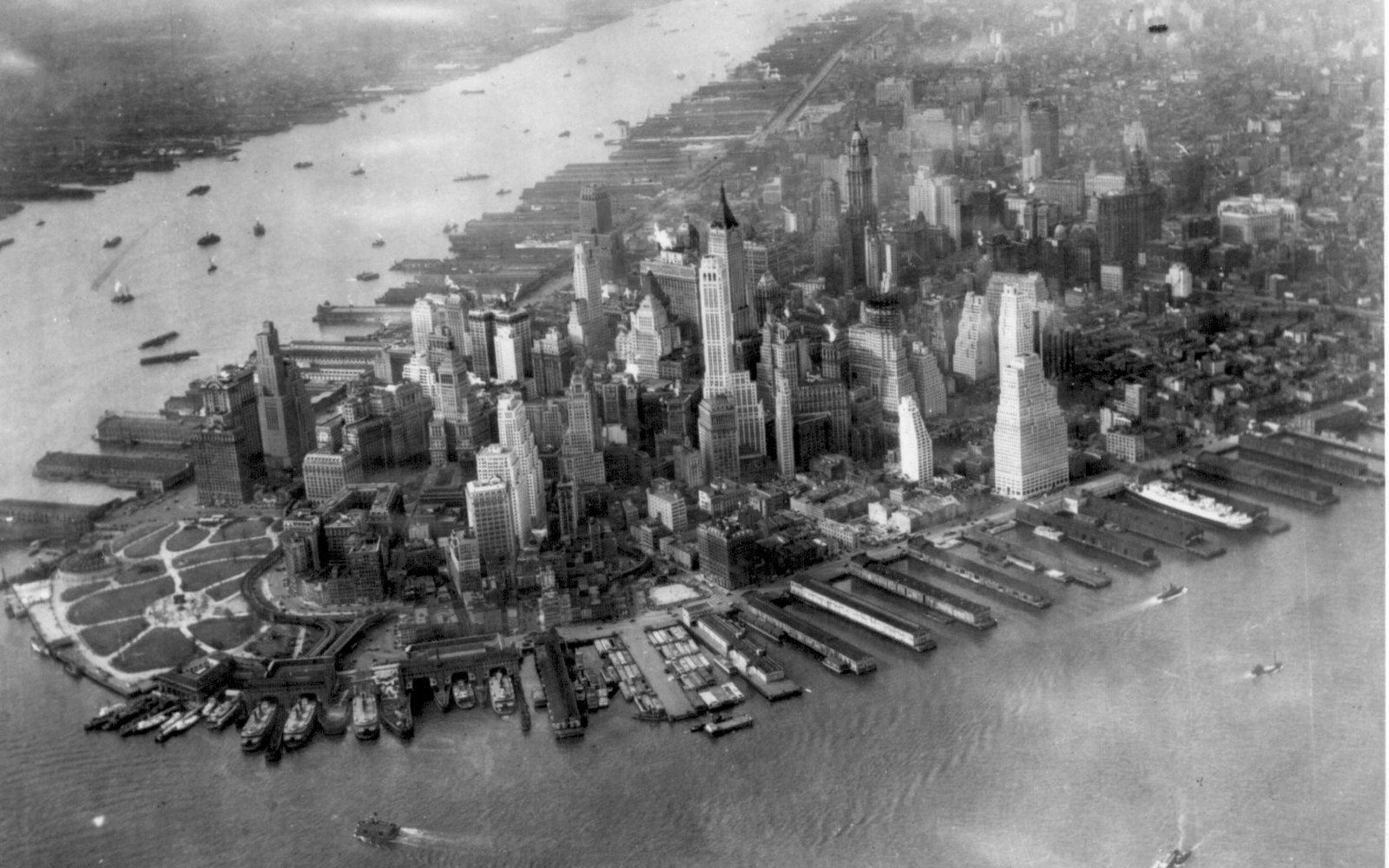
420 West Broadway, 1971 — Castelli, Sonnabend, Emmerich and Weber, one gallery to a floor.
Photo: Manhattan 1931 · Wikimedia Commons
The Building Before the Galleries
By the time Leo Castelli signed his lease in 1971, 420 West Broadway was already a relic of the neighbourhood's industrial past — a late-nineteenth-century building whose floors had been given over to light manufacturing and storage. SoHo's cast-iron district had survived urban-renewal pressure into the early 1960s largely through neglect; it was precisely that neglect, and the loft law New York City passed in 1971 to regulate artists' live-work occupancy of such buildings, that made the neighbourhood viable for any long-term tenancy at all. The floors were open, the ceilings ran to twelve feet or more, the freight elevators — those large industrial lifts that would become as famous in gallery mythology as any painting they carried — could take a rolled canvas or a welded steel sculpture with equal indifference. What Castelli recognised, and what would prove correct within a season, was that the building could function as a vertical gallery district: not a single room but a programme of rooms, stacked one above the other, with visitors riding the elevator between floors as they moved between dealers.
Castelli had been operating his gallery on East 77th Street since 1957, and moved downtown in 1971. His move to 420 West Broadway placed him on the second floor of the building. Ileana Sonnabend, his former wife and an equally formidable dealer, took the third floor. André Emmerich, who had been showing colour-field painting and pre-Columbian art from a 57th Street address, moved in as well. John Weber, who had managed Dwan Gallery in Los Angeles and New York and whose program centred on Minimalism and Conceptual art — Carl Andre, Daniel Buren, Hans Haacke, Sol LeWitt — took additional space. Four galleries, one building, one address. The result was not merely a convenience for collectors but an argument about what the gallery district itself could be.
The back office is where a district is actually run: leases, shipping schedules and the artists’ accounts.
Photo: Nic Wood / Pexels
Floors, Elevators and the Logic of the Stack
The practical genius of 420 West Broadway was the freight elevator. SoHo's manufacturing buildings had been designed to move heavy goods between floors, and the elevator at 420 was wide and deep enough to accommodate the overscaled works that Castelli and Sonnabend in particular were showing — the large canvases of Jasper Johns, Frank Stella and Roy Lichtenstein; the installations that conceptual and process artists had begun to demand as a format. A collector arriving on a Saturday afternoon in 1972 might take in a Castelli exhibition on the second floor, ride up to find a Sonnabend show of European Arte Povera or American post-Pop, and continue to Weber or Emmerich before re-emerging onto West Broadway, where dealers from neighbouring buildings — Paula Cooper had opened at 96–98 Prince Street in 1968, and the street itself was accumulating galleries at speed — formed the horizontal extension of the same cultural map.
The openings at 420 were events by any measure. Castelli was already the most celebrated dealer in America; showing Johns, Robert Rauschenberg, Richard Serra and Bruce Nauman, he had effectively written the history of American art from Pop through Minimalism and was already deep into his support of emerging figures. Sonnabend brought to the same address her European contacts and her commitment to Arte Povera — the Italian movement that used humble, everyday materials — as well as video and performance work that had almost no commercial market but enormous critical consequence. Her presence on the floor above Castelli meant that the intellectual and commercial weight of the building was formidable in both directions. The vernissage — the opening-night preview that functions as both press event and collector introduction — at either gallery was, through the 1970s, among the most attended in New York.
- 1957Leo Castelli opens his first gallery, East 77th Street, Manhattan
- 1968Paula Cooper opens at 96–98 Prince Street; first commercial gallery in SoHo
- 1971New York City loft law passed; Castelli, Sonnabend, Emmerich and Weber move into 420 West Broadway
- Mid-1970sWest Broadway between Houston and Spring Streets established as the dominant gallery district in the United States
- Early 1980sSoHo's transition toward retail begins; gallery migration to Chelsea accelerates through the 1990s
The Address as Argument
What 420 West Broadway accomplished was the collapse of the distance between the loft art scene and the commercial gallery. SoHo in the late 1960s had been organised, in part, around the idea that the neighbourhood's artists — working in live-work lofts that were technically illegal until the 1971 legislation — occupied a space outside the uptown market. The arrival of Castelli and Sonnabend did not erase that distinction, but it reframed it. The primary market — the sale of art directly from artist to first buyer — was now being conducted in a building indistinguishable in fabric from the lofts that surrounded it, among freight elevators and cast-iron columns, in rooms lit by the same north light that painters had sought when they first moved below Canal Street.
The concentration of four programs under one roof also accelerated the formation of a gallery district in the strictest sense: a clustering dense enough to generate foot traffic and critical mass that no single gallery could produce alone. By the mid-1970s, West Broadway between Houston and Spring Streets had become the gravitational centre of contemporary art dealing in the United States, with 420 functioning as its anchor. André Emmerich brought an entirely different clientele — collectors of Helen Frankenthaler, Morris Louis and Kenneth Noland, painters whose work required the same generous white walls but whose market had been built on 57th Street — meaning that the building served several collecting generations simultaneously.
The practical genius of 420 West Broadway was the freight elevator.
John Weber's program was perhaps the most consequential of the four in strictly art-historical terms, even if it was the least commercially spectacular. By consistently showing artists whose work questioned the commodity status of the art object — Haacke's institutional critiques, Buren's striped interventions in gallery architecture, LeWitt's wall drawings executed by assistants on site — Weber ensured that 420 West Broadway contained, within a few floors, both the market's most celebrated product and its most pointed critique.
The building held its concentration through the 1970s and into the early 1980s, when SoHo itself began the long transition from art district to retail destination that would, by the 1990s, push galleries toward Chelsea. Castelli eventually expanded his operations; Sonnabend remained on West Broadway; the other tenants shifted. But the period between 1971 and roughly 1982 — when the Mary Boone Gallery's star-system theatrics a few blocks away signalled a change in register — was the period in which 420 defined what a New York gallery address could mean: not a room, not even a floor, but a building with an argument running through every storey.
The building in section. Castelli, Sonnabend, Weber and Emmerich each took a floor; floor assignments follow the galleries' own accounts. The stairwell is marked in yellow.
Diagram