The Ninth Floor Where It Began
How Betty Parsons, working from a suite on the ninth floor of 15 East 57th Street, gave Abstract Expressionism its first sustained commercial home — and watched her artists leave for a dealer who could pay them.
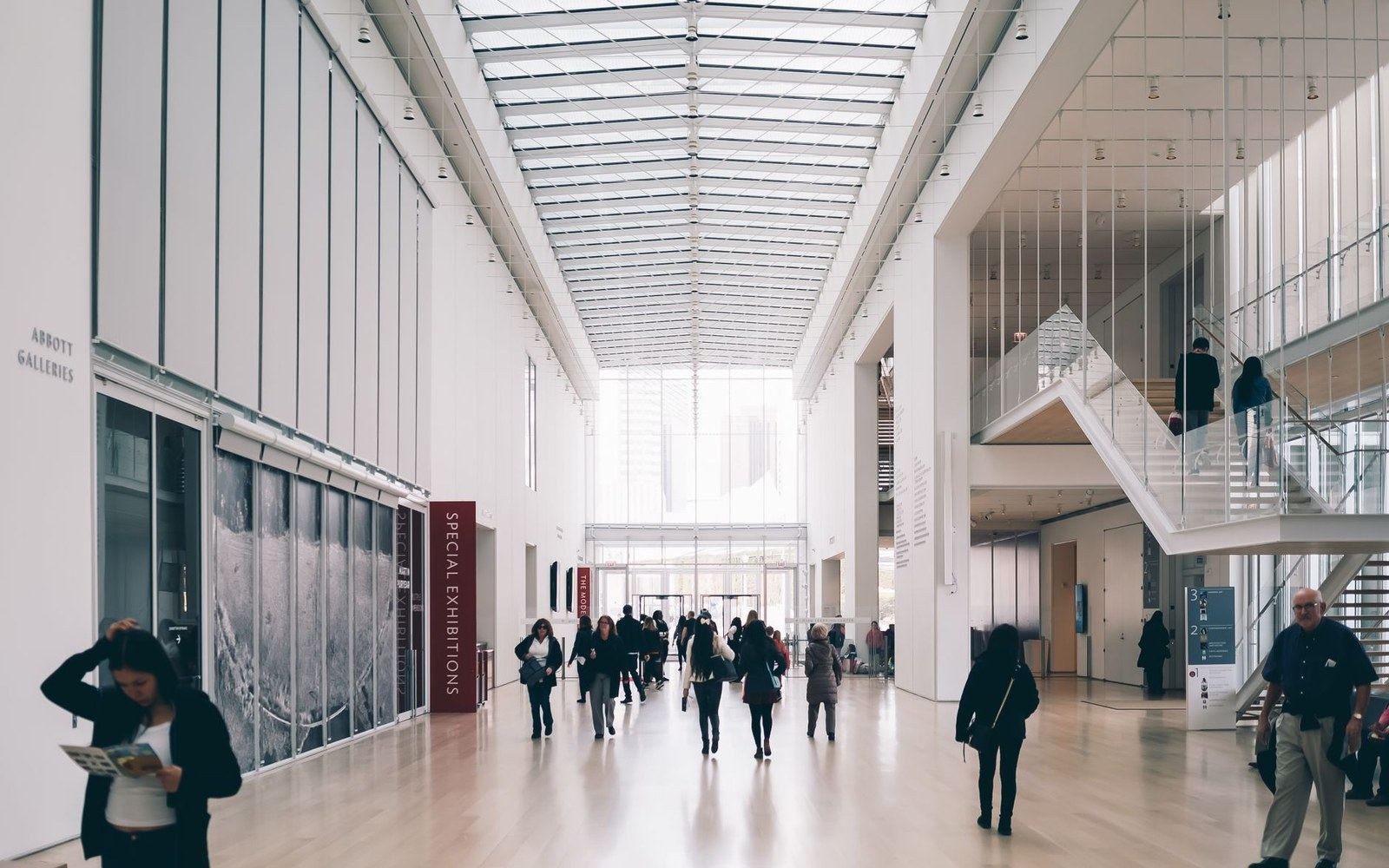
Betty Parsons Gallery, ninth floor of 15 East 57th Street, where Pollock, Rothko and Newman were shown before there was a market for them.
Photo: Ricky Esquivel / Pexels
The Room and the Risk
The elevator opened on the ninth floor of 15 East 57th Street, and the space that Betty Parsons had taken in 1946 was, by the standards of Midtown's established trade, modest. The rooms were not large. The ceilings were not exceptional. What Parsons brought to them was a program — in gallery usage, the roster of artists a dealer represents and the curatorial logic connecting them — that no comparable commercial space in New York was willing to carry.
She had come to the address after a brief tenure running the gallery section of the Wakefield Bookshop and then a stint at the Mortimer Brandt Gallery, where she had already begun showing work outside the accepted market consensus. When she opened under her own name in the autumn of 1946, the artists she immediately committed to were not yet names that collectors trusted to hold value: Jackson Pollock, Mark Rothko, Barnett Newman, Clyfford Still, Ad Reinhardt. Abstract Expressionism — the post-war American painting movement whose ambitions were both scale and metaphysical seriousness — had almost no secondary market because it had barely been through a primary one. Parsons showed it anyway, at 15 East 57th, season after season, absorbing the risk that came with work that sold slowly and sometimes did not sell at all.

For twenty years a floor number on a lobby board was the whole address a New York gallery needed.
Photo: Oluwaseun Duncan / Pexels
The hanging practice she developed in those rooms was itself a statement. Where other Midtown galleries of the period treated wall space as retail display, grouping works by price point or accessibility, Parsons gave the paintings room to breathe and demand attention on their own terms. A Pollock was not softened by context; a Newman stripe painting was not apologised for. The rooms at 15 East 57th became, in effect, the first sustained argument in a commercial space that American painting had arrived at something new — and that the argument deserved the gravity of sustained presentation rather than the hedged enthusiasm of a group show.
The Artists and the Departure
The roster that gathered around Parsons in the late 1940s and early 1950s reads now as an inventory of the post-war canon. Pollock had his first solo show at Betty Parsons Gallery in 1948, having arrived from Peggy Guggenheim's Art of This Century, which had closed in 1947. Rothko came to Parsons in the same period, as did Newman, whose first solo exhibition — held at the gallery in 1950 — was largely met with incomprehension by critics and collectors alike. Still had shown with Parsons beginning in 1947. The gallery also showed work by Hans Hofmann, Richard Pousette-Dart, Theodoros Stamos and Walter Murch, making 15 East 57th the single most concentrated address for the movement that would eventually define American modernism internationally.
What Parsons could not offer was money. She was not a wealthy dealer operating from family capital, and the work she showed generated inconsistent sales in a market that had not yet been educated into wanting it. Artists who depended on their galleries for income — and many of the Abstract Expressionists were doing so in conditions of genuine financial difficulty — found that Parsons's commitment, however real, could not substitute for a paycheck. The crisis came in 1952, when Sidney Janis, established at 15 East 57th Street and already respected for his handling of European modernism, offered the gallery's leading figures representation under terms that included actual financial support and a more aggressive sales effort.
- 1946Betty Parsons Gallery opens on the ninth floor of 15 East 57th Street
- 1947Clyfford Still begins showing with Parsons; Peggy Guggenheim's Art of This Century closes, sending Pollock to the gallery
- 1948Pollock's first solo show at Parsons
- 1950Barnett Newman's first solo show at Parsons, widely dismissed on opening
- Early 1950sPollock, Rothko and Still depart Parsons for Sidney Janis Gallery
- 1957Leo Castelli opens on East 77th Street, citing Parsons's model implicitly
- 1963Parsons relocates to 24 West 57th Street; the 15 East 57th tenancy ends
Pollock, Rothko, Newman, Still and de Kooning all moved to Janis. The departures happened with varying degrees of ceremony, but the collective effect was understood by everyone in the building and across the Midtown trade: the artists Parsons had incubated, whose reputations she had built year by year in those ninth-floor rooms, left for a dealer who could pay them. It was one of the most consequential migrations in the history of American commercial galleries — a clean case study in the gap between critical commitment and commercial infrastructure.
What the Gallery Left Behind
Parsons's response was not collapse. She continued at 15 East 57th, shifting her program toward younger artists and, increasingly, toward work in three dimensions and mixed media. She showed Ellsworth Kelly, Robert Rauschenberg, Jack Youngerman and Cy Twombly in the 1950s, sustaining the gallery's reputation for programs built on conviction rather than market consensus. She was also a practising artist herself — painter, sculptor, collector of found objects — and that dual identity shaped how she ran the space: with the eye of someone who had made things rather than only bought and sold them.
The gallery continued operating at 15 East 57th until 1963, when Parsons moved to 24 West 57th Street, where she remained through the late 1970s. The address changed; the disposition did not. She went on showing artists whose work was not yet commercially comfortable long after the Abstract Expressionist moment had passed and the market had caught up to the painters she had first presented.
The hanging practice she developed in those rooms was itself a statement.
What the ninth floor produced, in the years between 1946 and 1952, was a template. The idea that a commercial gallery could operate as a primary site of critical conviction — not a secondary ratifier of museum taste, not a showroom for work already validated elsewhere — was not invented by Parsons, but it was demonstrated in those rooms with an intensity and a consistency that made it legible as a model. Leo Castelli, who opened on East 77th Street in 1957 and whose program for Jasper Johns and Robert Rauschenberg drew explicit comparisons to Parsons's method, acknowledged the precedent. The willingness to carry artists through long periods of financial underperformance, trusting the quality of the work over the readiness of the market, became the self-understanding of a certain kind of New York dealer — and it traced back, in practice if not always in attribution, to 15 East 57th.
The building itself, a standard Midtown commercial tower of the early twentieth century, continues to stand on 57th Street between Fifth and Madison Avenues. The ninth floor no longer houses a gallery. What it housed between 1946 and 1963 was something the art world spent the following decades measuring itself against: a record of what it looks like when a dealer decides that the work is right before the world has agreed — and holds that position long enough to be proved correct, even at the cost of losing the artists whose careers that position built.
Elsewhere in 57th Street: Sidney Janis Gallery at 15 West 57th Street, where Mondrian, Léger and de Kooning hung in the same rooms. What Sidney Janis Brought Over
Photo: Harry Xie / Pexels
| Jackson Pollock | arrived from Peggy Guggenheim's Art of This Century, 1947 |
|---|---|
| Mark Rothko | showed with Parsons through the late 1940s and early 1950s |
| Barnett Newman | solo debut at Parsons, 1950 |
| Clyfford Still | with the gallery from 1947 |
| Ad Reinhardt | part of the original program |
| Hans Hofmann, Richard Pousette-Dart, Theodoros Stamos | also on program |