Storm King and the Room Sculpture Needs
Five hundred acres in the Hudson Valley where a di Suvero or a Serra gets the distance no Manhattan floor can give it.
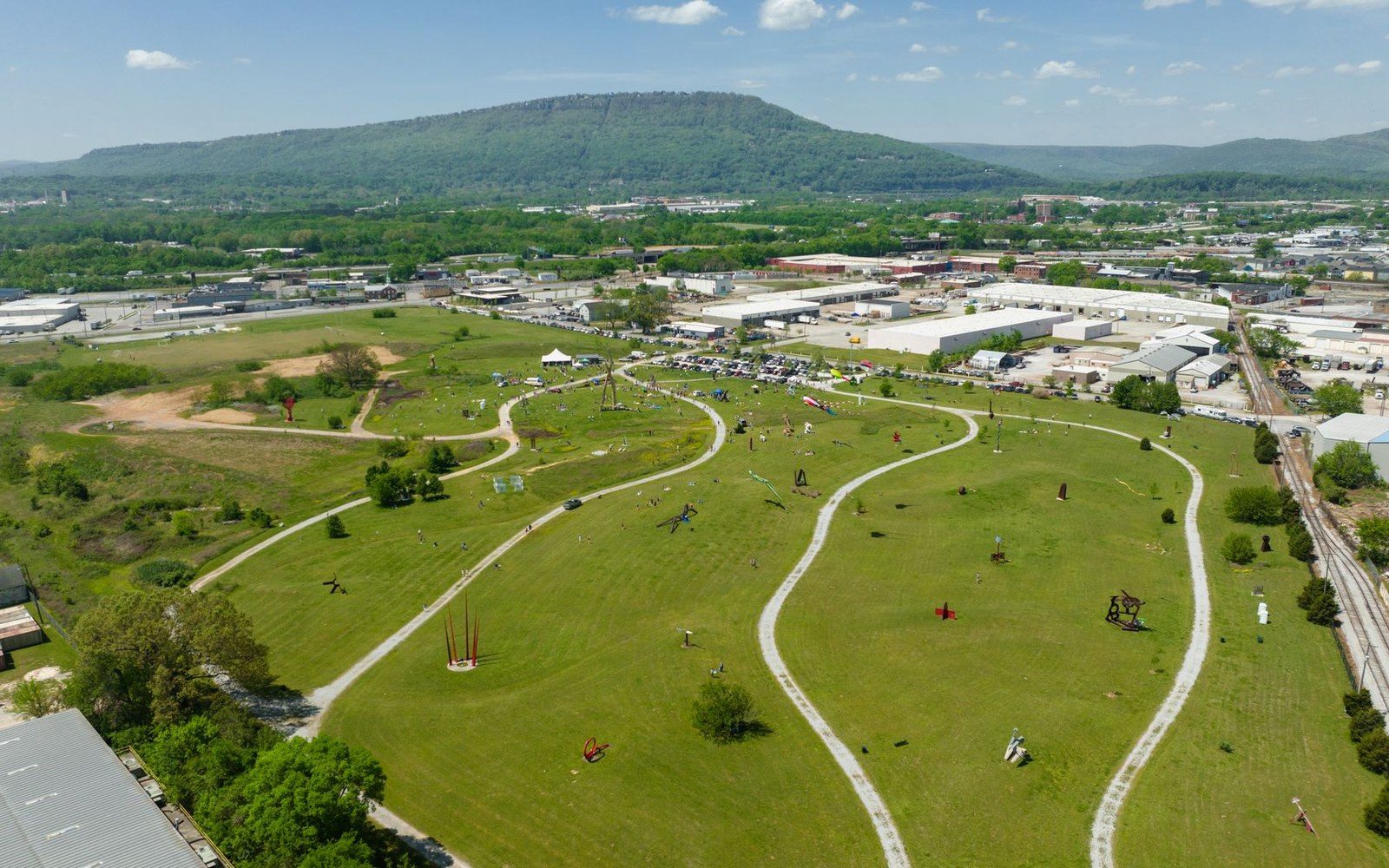
Storm King Art Center, five hundred acres in the Hudson Valley, opened 1960 — the distance a Manhattan floor cannot give.
Photo: K / Pexels
A Field, Not a Floor
Storm King Art Center opened in 1960 on a former estate in Mountainville, New York, in Orange County, roughly sixty miles north of Midtown Manhattan. Ralph Ogden and H. Peter Stern, the men behind it, began with a vision modest enough — a museum of Hudson Valley painting — but the land itself redirected the project. Once Mark di Suvero's steel beams and Richard Serra's rolled plates started arriving in the fields, it became clear that Storm King had solved a problem that no urban gallery could: it gave sculpture room to breathe, room to cast shadow, room to be walked around without hitting a wall.
The site now spans approximately 500 acres, an expanse that accommodates roughly one hundred works at any one time, set across meadows, woodland paths and contoured hillside. No commercial gallery in Manhattan — not even the most expansive Chelsea floor — approaches that kind of horizontal territory. A work like Serra's Schunnemunk Fork (1991), four Cor-Ten steel plates driven into a hillside, requires topography as much as it requires fabrication. The plates respond to slope and sight-line in ways a gallery wall simply cannot replicate.
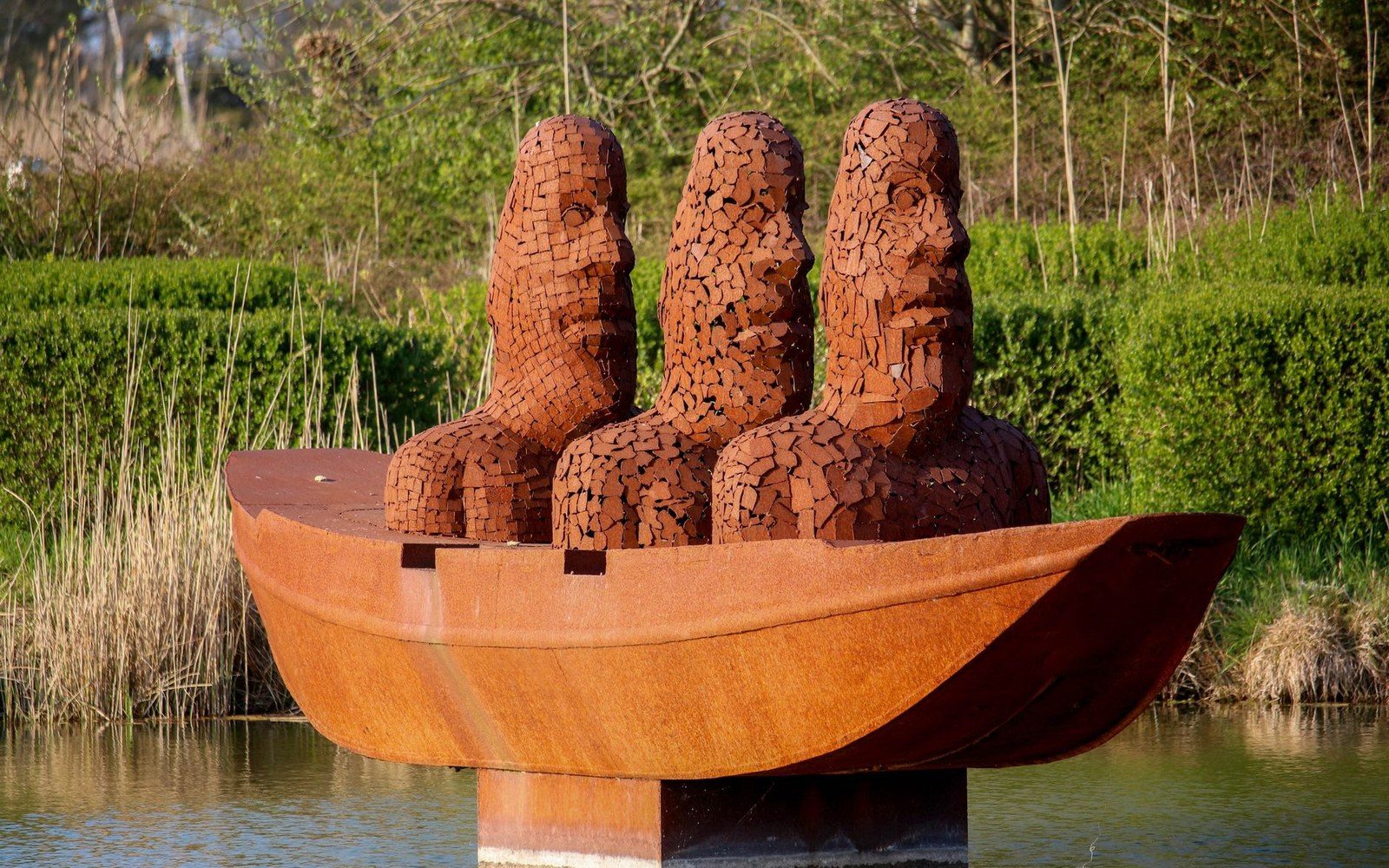
Outside the city the same trade needs acreage, and a figure in the frame is the only way to show it.
Photo: Maurice Engelen / Pexels
What the City Cannot Give
The argument Storm King makes, implicitly, is spatial: certain sculpture is not adequately encountered indoors. This is not an observation about quality but about scale and orientation. Alexander Calder's large stabiles were designed to interact with open air, with changing light and horizon. Di Suvero's crane-scaled constructions — I-beams and cables working against gravity at spans that can exceed thirty feet — presuppose a viewer who can step back far enough to take in the whole object and then move toward it. The relationship between body, object and distance is the content, not merely the setting.
The New York gallery world understood this, up to a point. Pace Gallery, which has represented Alexander Calder's estate among other monumental accounts, could stage a Calder exhibition on 57th Street or in Chelsea but was always working against the constraint of ceiling and footprint. The primary market for large-scale sculpture depended on institutions like Storm King to make the case for the work in the conditions the work demanded, and dealers understood that a collector who had seen a Serra in a field was a different kind of buyer than one who had seen it photographed.
- 1960Storm King Art Center founded by Ralph Ogden and H. Peter Stern in Mountainville, New York
- 1991Richard Serra's Schunnemunk Fork installed on site
- 2003Dia:Beacon opens in converted Nabisco plant, Beacon, NY
- 2009Maya Lin's Wave Field completed at Storm King
Storm King's acquisition history is correspondingly ambitious. The collection includes major works by Louise Nevelson, David Smith, Isamu Noguchi, Andy Goldsworthy and Alice Aycock alongside di Suvero and Serra. Maya Lin's Wave Field (2009) shaped eleven acres of earth into a rippling grass surface — a work that is, by definition, its site. No dealer's storage facility and no temporary fair booth could stage a maquette that honestly represented it.
The Gallery Relationship
Storm King is not a commercial gallery and operates as a non-profit institution, but it sits inside the same ecology as the Manhattan art trade. Dealers have routinely used its permanent collection as evidence, bringing collectors north to see the full scale of work they were considering. The distance from Chelsea — an easy two-hour drive up the Hudson — is close enough for a day trip and far enough to feel like a shift of register.
The Dia Art Foundation, which opened Dia:Beacon in a converted Nabisco plant farther up the Hudson in 2003, operates along a similar logic: minimal and post-minimal work that requires extended duration and substantial space. Together, Storm King and Dia:Beacon constitute the Hudson Valley as the region where New York's gallery culture deposits what it cannot hold downtown. The city generates the market; the valley provides the room.
The argument Storm King makes, implicitly, is spatial: certain sculpture is not adequately encountered indoors.
That arrangement has held for more than six decades. Storm King's longevity — still adding commissions, still drawing the collector buses that depart from Chelsea on art-fair weekends — suggests that the problem it solved in 1960 has not become obsolete. If anything, as galleries have grown larger and sculpture has grown more ambitious, the five hundred acres look less like a supplement to the Manhattan art world and more like its necessary other half.
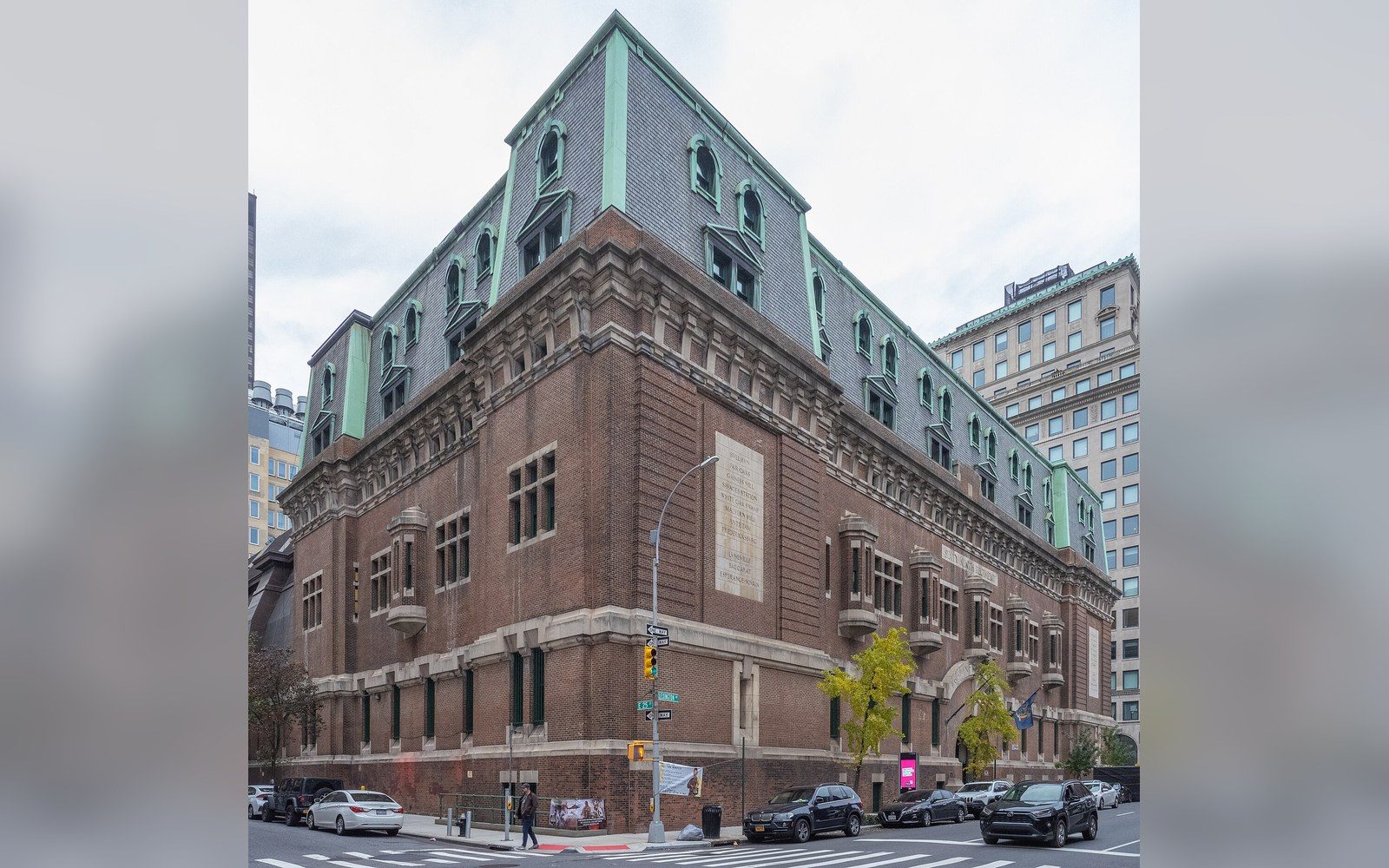
Elsewhere in Downtown: The 69th Regiment Armory on Lexington Avenue, which held roughly 1,300 works at the 1913 International Exhibition of Modern Art. The 69th Regiment Armory and the Show That Changed the Count
Photo: 69th Regiment Armory · Wikimedia Commons
| Storm King site | approximately 500 acres, Orange County, New York |
|---|---|
| Distance from Midtown Manhattan | roughly 60 miles north |
| Permanent collection | approximately 100 works displayed at any one time |
| Maya Lin's Wave Field | About 11 acres of formed earth |