The Stacked Boxes on the Bowery
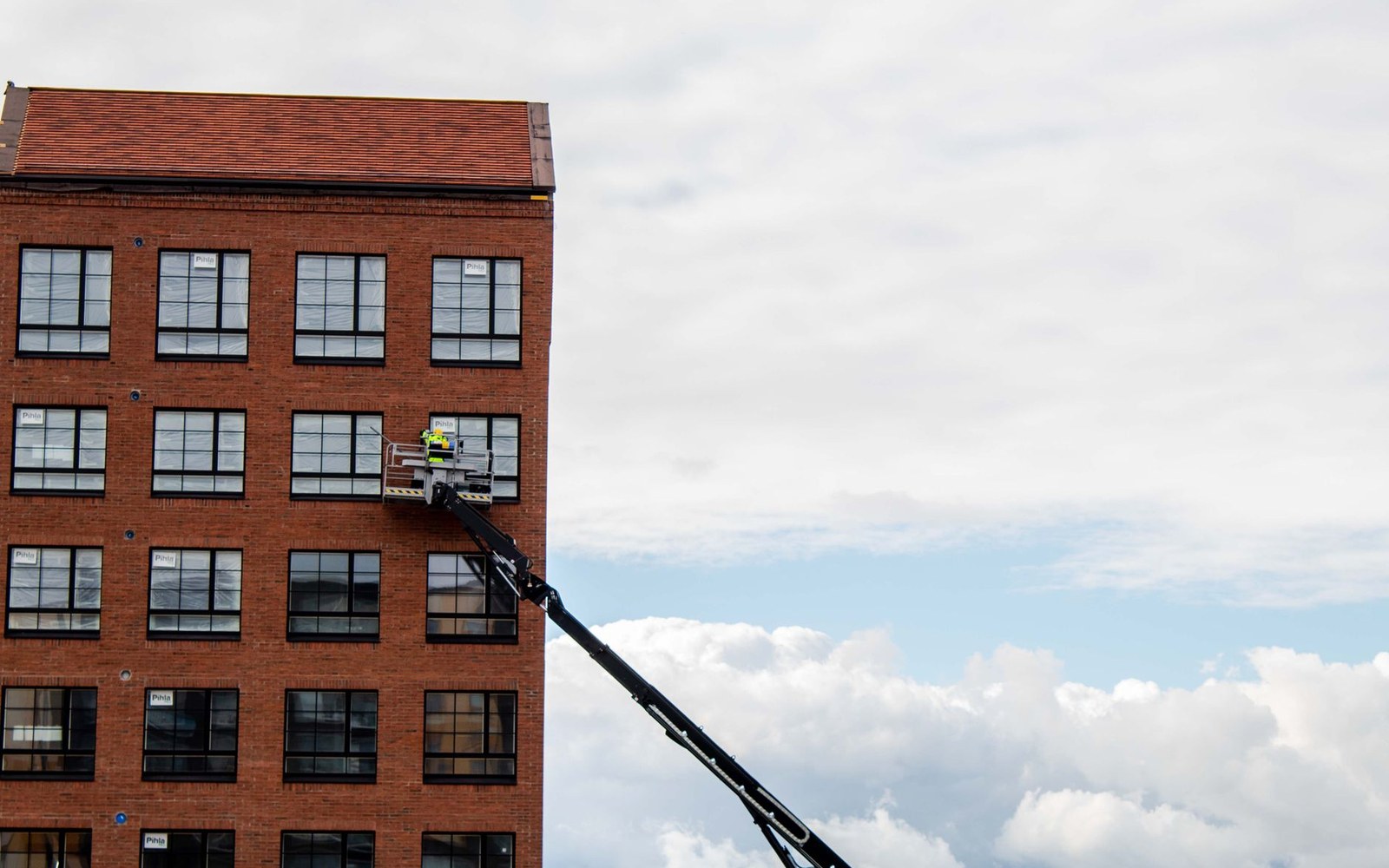
SANAA’s New Museum, 235 Bowery, opened December 2007 — stacked volumes in aluminium mesh, built new rather than adapted.
Photo: Paul G / Pexels
How SANAA's New Museum turned a single block into a neighbourhood pivot
A Building That Doesn't Hide
The New Museum opened on the Bowery in December 2007 in a building that refuses to recede. Designed by the Tokyo firm SANAA — Kazuyo Sejima and Ryūe Nishizawa — it stacks seven aluminium-mesh-clad volumes of slightly different sizes and slightly different alignments, each one offset from the one below, producing a silhouette that reads as improvised while being precisely engineered. On a strip long defined by flophouses, restaurant-supply warehouses and the residue of New York's skid-row era, the building read as a provocation. That was the point.
The institution had been nomadic for three decades before it committed to a new-construction site. Founded by Marcia Tucker in 1977, the New Museum began in space at the New School on Fifth Avenue, then moved in 1983 to 583 Broadway in SoHo, where it stayed for more than two decades — a tenant, like the galleries around it, in someone else's building. The decision to commission an entirely new structure rather than adapt an existing shell was itself a statement: permanence, and a claim on a block nobody else was claiming.
The back office is where a district is actually run: leases, shipping schedules and the artists’ accounts.
Photo: Nic Wood / Pexels
Why the Bowery
The address — 235 Bowery — placed the museum on the seam between two neighbourhoods already in motion. SoHo, to the west and north, had by the mid-2000s completed its transformation from gallery district to luxury retail corridor; the galleries that had made it were mostly gone, either to Chelsea or out of business. The Lower East Side, to the east, was accumulating a younger, scrappier gallery culture in tenement storefronts — real-estate economics that suited dealers who couldn't afford Chelsea's converted garages. The Bowery sat between these two gravitational fields, and the New Museum's arrival gave the intersection a fixed point.
The SANAA design reinforced this positional logic. Kazuyo Sejima and Ryūe Nishizawa would win the Pritzker Architecture Prize in 2010, but in 2007 their New York building was already understood as an argument about what a cultural institution should look like in a post-industrial streetscape. The anodised aluminium mesh — the same material wraps all seven boxes — diffuses light and changes character across the day, making the building seem to breathe. On the Bowery, where the elevated infrastructure of the old Third Avenue El had long since come down but the street had never gentrified cleanly, the effect was startling without being alien.
- 1977New Museum founded by Marcia Tucker
- 583 BroadwaySoHo address before the Bowery move
- December 2007New Museum opens at 235 Bowery
- 2010SANAA principals Sejima and Nishizawa awarded Pritzker Prize
- 2010Sperone Westwater opens at 257 Bowery, a block or so north
The building contains approximately 60,000 square feet of space across those stacked volumes, with gallery floors that vary in ceiling height between levels, a ground-floor lobby, a seventh-floor Sky Room and a rooftop terrace. The structural logic — each box is a separate volume resting on the one below — dictated column-free gallery floors, giving curators the open plan that a contemporary programme demands.
The District Follows the Building
Within a few years of the New Museum's opening, gallery attention along the Bowery and its immediate neighbours — Rivington Street, Orchard Street, Ludlow Street — intensified. The museum did not cause the Lower East Side gallery scene; that had been building since the early 2000s. What it did was change the optics of the address. An institution of international standing had chosen this block, which made the surrounding blocks legible to dealers, collectors and critics as a destination rather than a detour. Sperone Westwater, one of SoHo's long-standing galleries, moved into a Foster + Partners building at 257 Bowery in 2010 — a block or so north — a decision that would have been harder to imagine without the New Museum's prior commitment.
The stacked-box form became the building's nickname and its brand simultaneously. Visible from the Manhattan Bridge approach, from Delancey Street, from the roof of almost anything in NoLIta, the SANAA building functions as a landmark the way landmarks are supposed to: it tells you where you are, and it tells you the neighbourhood has changed.
The institution had been nomadic for three decades before it committed to a new-construction site.
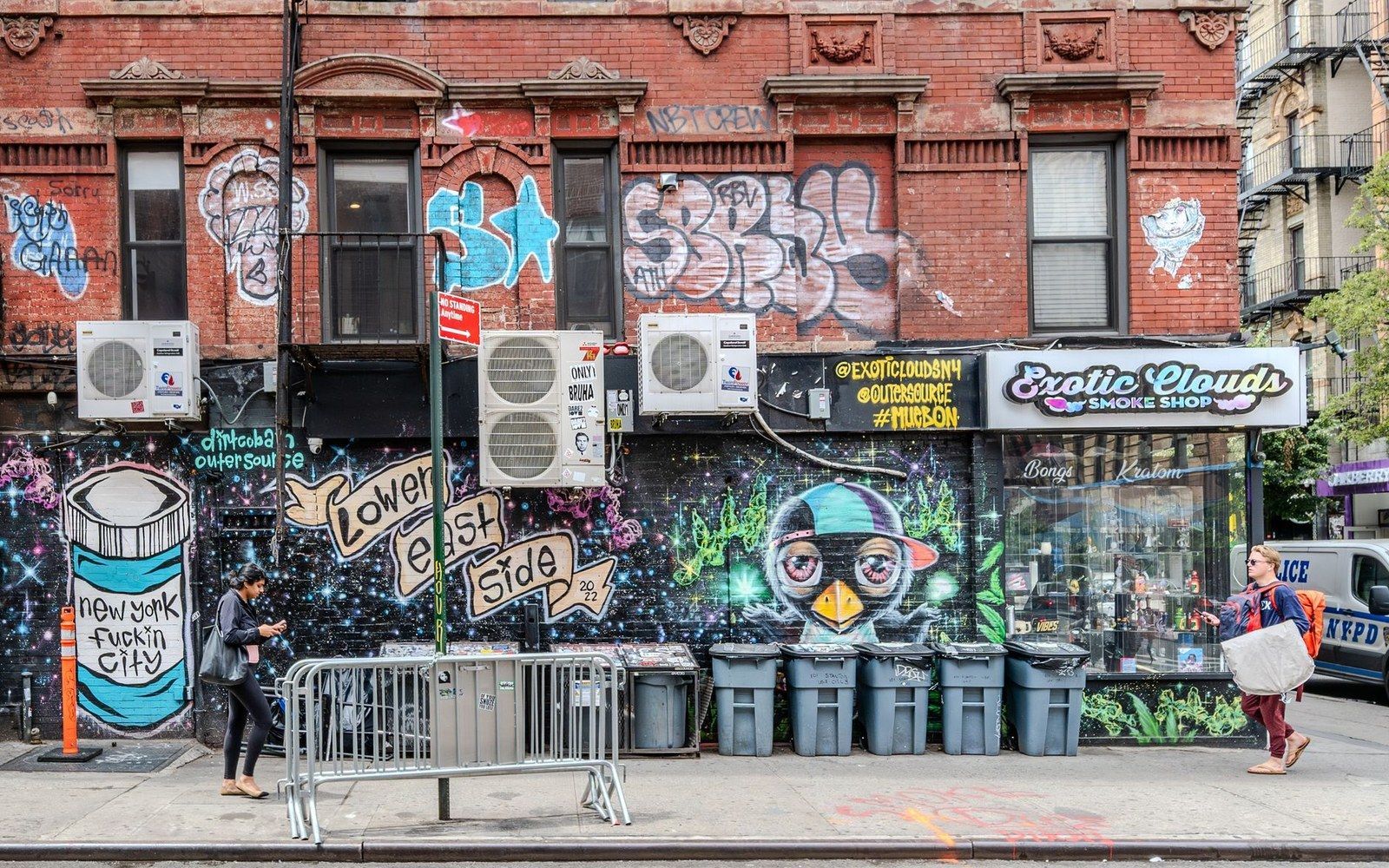
Elsewhere in Downtown: Storefront galleries on Orchard, Rivington and Eldridge, opened in the years after the New Museum arrived on the Bowery. The Lower East Side After the New Museum
Photo: Marcelo Gonzalez / Pexels