The First Garage on West 22nd
How Matthew Marks's 1994 lease on a former garage in West Chelsea set the floor plan every dealer who followed would copy.
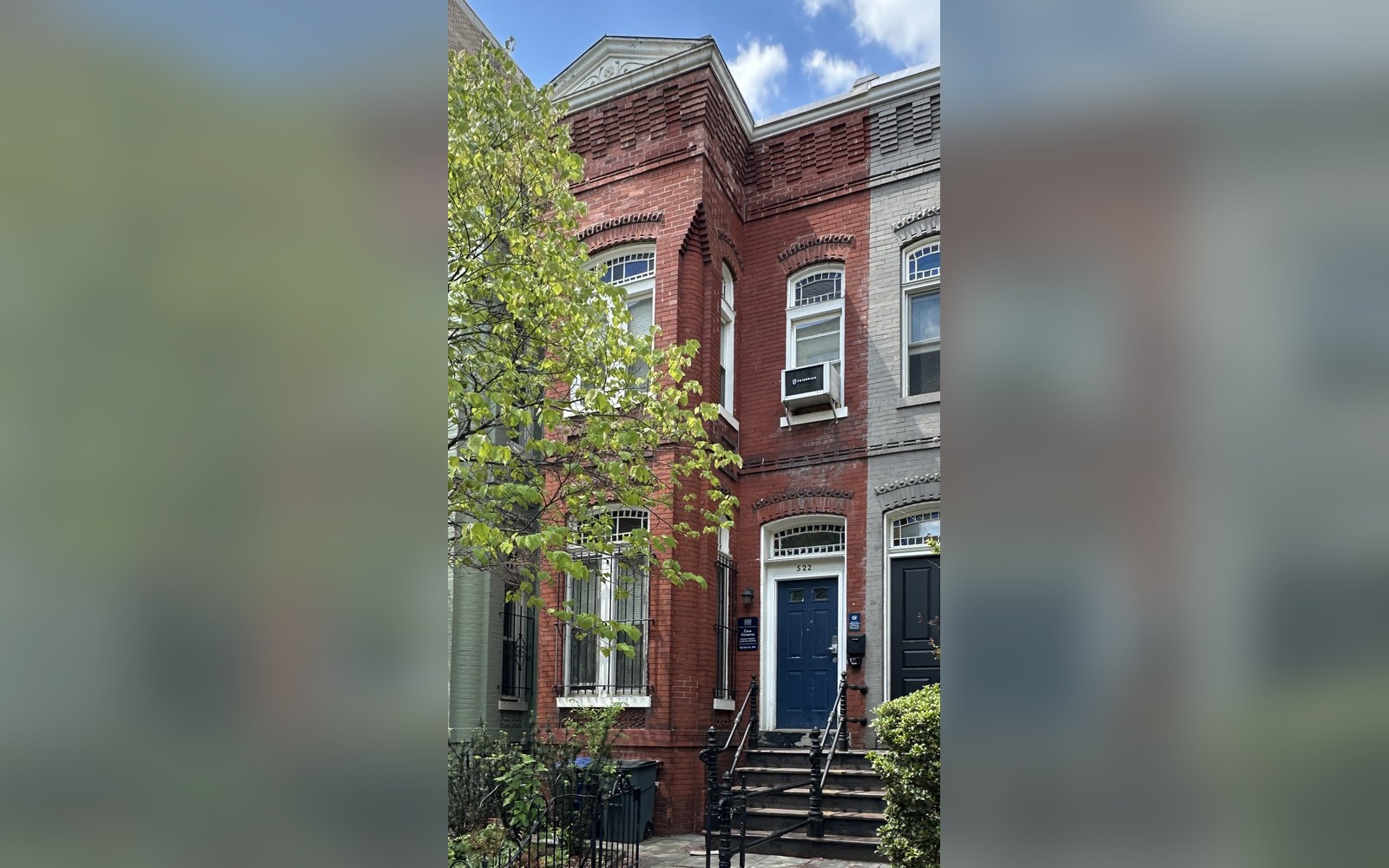
Matthew Marks’s former garage at 522 West 22nd Street, leased 1994 — the spatial grammar Chelsea repeated for twenty years.
Photo: 522 22nd Street NW · Wikimedia Commons
Why a Garage
When Matthew Marks signed the lease on 523 West 24th Street in 1994, Chelsea was still a neighbourhood of truck depots, auto-body shops and low-slung industrial buildings whose main distinction was cheap rent and proximity to the Hudson. The gallery world was overwhelmingly uptown — clustered on 57th Street and Madison Avenue — or concentrated in SoHo's cast-iron lofts, where Paula Cooper had opened in 1968 and Leo Castelli had anchored 420 West Broadway in 1971. Marks's decision to move into a former garage, rather than adapt yet another SoHo loft or compete for the diminishing floor space left uptown, was not, at first, obviously brilliant. It became, within five years, the founding gesture of an entirely new gallery district.
Marks had been working in London and dealing privately before he opened his first New York space, and he understood that the SoHo model — a freight-elevator building subdivided among several tenants, foot traffic generated by proximity — was both expensive and, by the early nineties, aesthetically exhausted. What the West 20s offered instead was something genuinely different: single-storey former industrial buildings whose floor-to-ceiling heights ran to twelve or fifteen feet, whose street-level loading bays could be converted into glass-fronted entries without structural drama, and whose ground-floor plates were wide enough to hang paintings the size of walls. No freight elevator was necessary because everything was already on the ground.
Ceiling height, not floor area, decided which buildings could take the work.
Photo: cottonbro studio / Pexels
The Spatial Grammar
The Matthew Marks Gallery opened on West 24th Street, then added a second space at 522 West 22nd Street — the former garage that would give the emerging district much of its spatial logic. The 22nd Street building offered a single, unbroken volume: concrete floor, white walls, natural light through a saw-tooth roof or clerestory windows, and a ceiling height that made SoHo lofts feel domestic by comparison. There was no staircase to negotiate, no awkward column grid inherited from a textile warehouse. The room itself was the argument.
That spatial logic — expansive, column-free, single-level — proved perfectly calibrated for the large-scale painting and sculpture that defined the most ambitious gallery programmes of the 1990s. Marks showed artists including Lucian Freud, Ellsworth Kelly and Brice Marden in those first Chelsea years, and the scale of the rooms made the ambition of the programme legible in physical terms. Paula Cooper moved from Prince Street to 534 West 21st Street in 1996. Barbara Gladstone, Larry Gagosian, and Dia Art Foundation's repurposed industrial footprint on West 22nd all followed in the same block radius. By 2000, West 22nd and 24th Streets had more gallery square footage than any comparable stretch in SoHo had ever contained.
- 1968Paula Cooper opens in SoHo at 96–98 Prince Street
- 1971Leo Castelli moves into 420 West Broadway
- 1994Matthew Marks signs lease on 523 West 24th Street, Chelsea; adds 522 West 22nd Street shortly after
- 1996Paula Cooper relocates to 534 West 21st Street, Chelsea
- Mid-2000sADAA records more than 200 galleries in West Chelsea
What Every Gallery Copied
The garage model was replicable in a way the SoHo loft was not. A cast-iron building on Prince Street required a specific building stock, a specific zoning history, and a specific legal framework — the loft law — to occupy. A former garage or auto-body shop on a West Chelsea side street required only a long commercial lease, a concrete pour, a lighting grid and a coat of white paint. Dozens of galleries executed precisely that formula between 1994 and 2010. The ADAA counted more than two hundred galleries in West Chelsea by the mid-2000s, a density of commercial exhibition space without precedent in any American city.
What Marks had done, almost incidentally, was invent a room type. Not a white cube in the theoretical sense — the term predated him — but a specific American variant: wide, high, ground-floor, raw-edged, built inside a working-class industrial shell that made no effort to pretend otherwise. The concrete floors stayed. The loading-bay doors stayed. The neighbourhood's practical history was worn on the surface, and collectors, for the first time in decades, had to drive rather than stroll to see the work.
The [Matthew Marks Gallery](https://www.
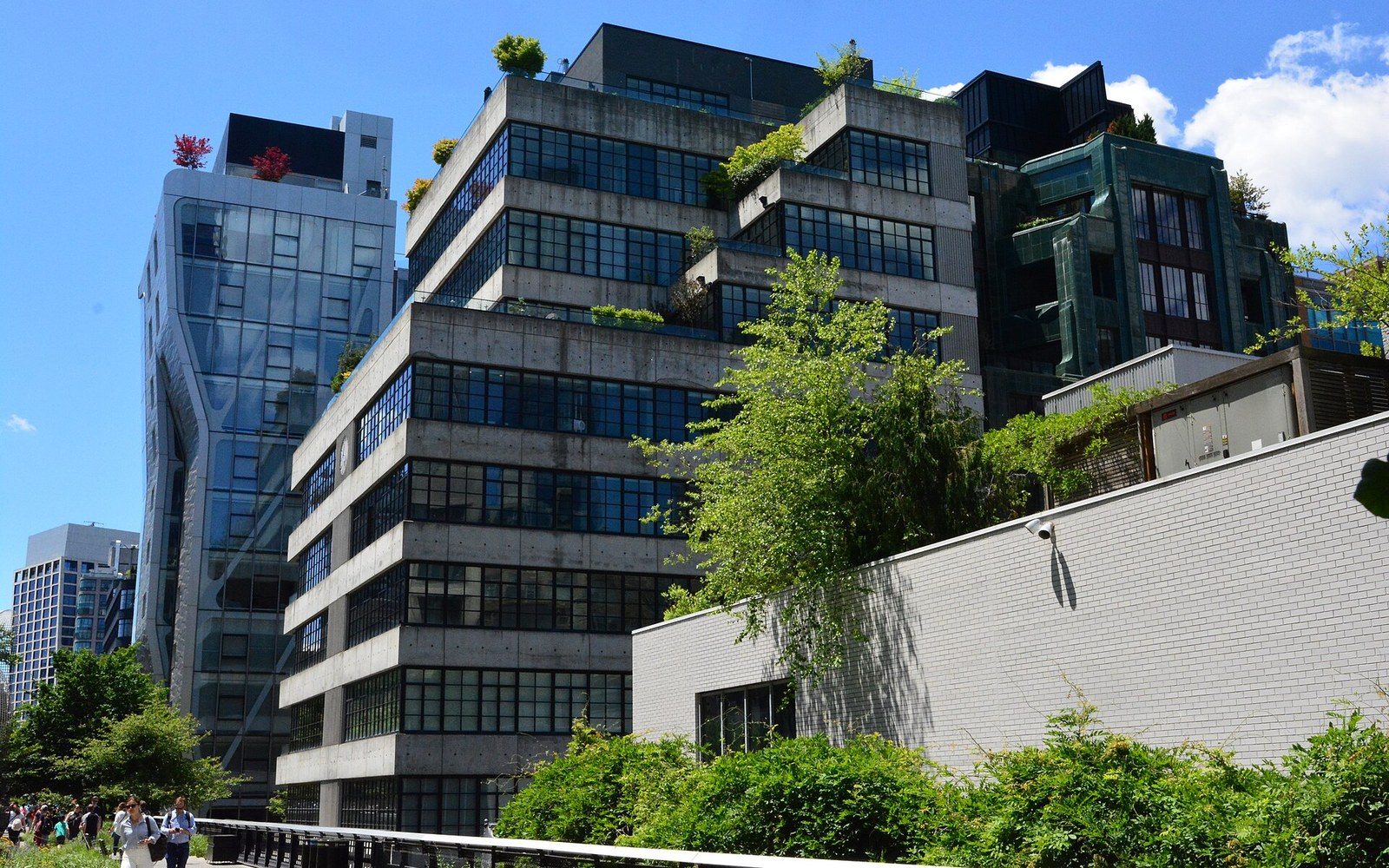
Elsewhere in Chelsea: Gagosian at 555 West 24th Street, the first of a run of Chelsea addresses taken after 980 Madison Avenue. Larry Gagosian Takes the Whole Block
Photo: NYC - High Line, looking south across W 24th Street · Wikimedia Commons