Larry Gagosian Takes the Whole Block
From 980 Madison to a Chelsea campus: how one dealer's appetite for square footage rewired the geography of the New York art market.
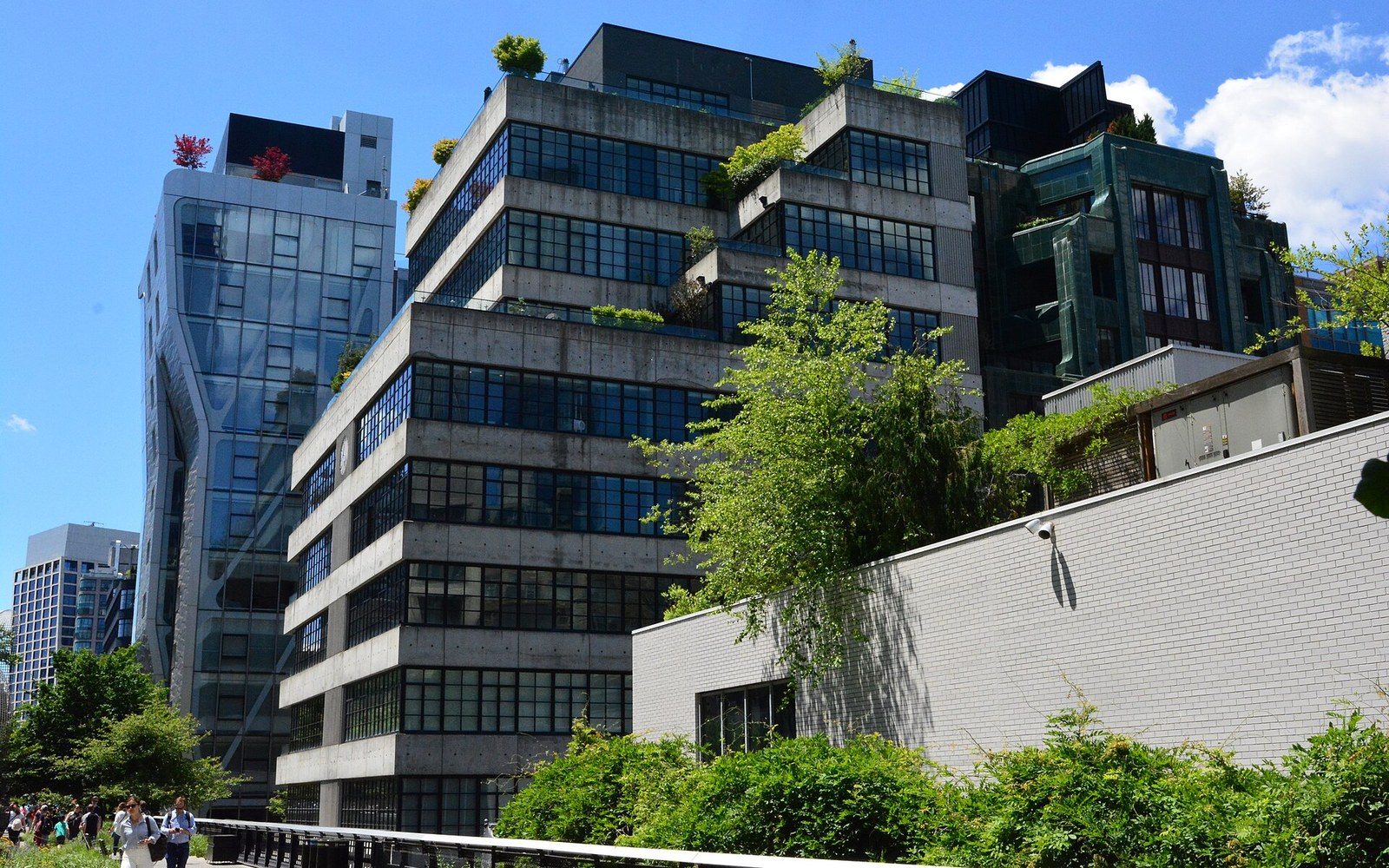
Gagosian at 555 West 24th Street, the first of a run of Chelsea addresses taken after 980 Madison Avenue.
Photo: NYC - High Line, looking south across W 24th Street · Wikimedia Commons
Madison Avenue to West 24th Street
Larry Gagosian opened his Upper East Side gallery at 980 Madison Avenue in 1989, planting himself in the corridor where Acquavella, Wildenstein and the old guard had always done business. The address was right for the moment — blue-chip secondary market, private viewing rooms, serious collectors — but the space was modest by the standards Gagosian would later set for himself. What changed the calculation was Chelsea.
Matthew Marks signing the lease on West 22nd Street in 1994 was the signal that the former industrial blocks west of Tenth Avenue could absorb major gallery tenancy. Gagosian read it quickly. In 1999 he opened at 555 West 24th Street, taking a converted garage — roughly 8,000 square feet on the ground floor — and commissioning a fit-out whose clean, skylit volume announced that this was not a provisional experiment. The address put him at the heart of what was already becoming the densest gallery district New York had produced since SoHo's peak years on West Broadway.
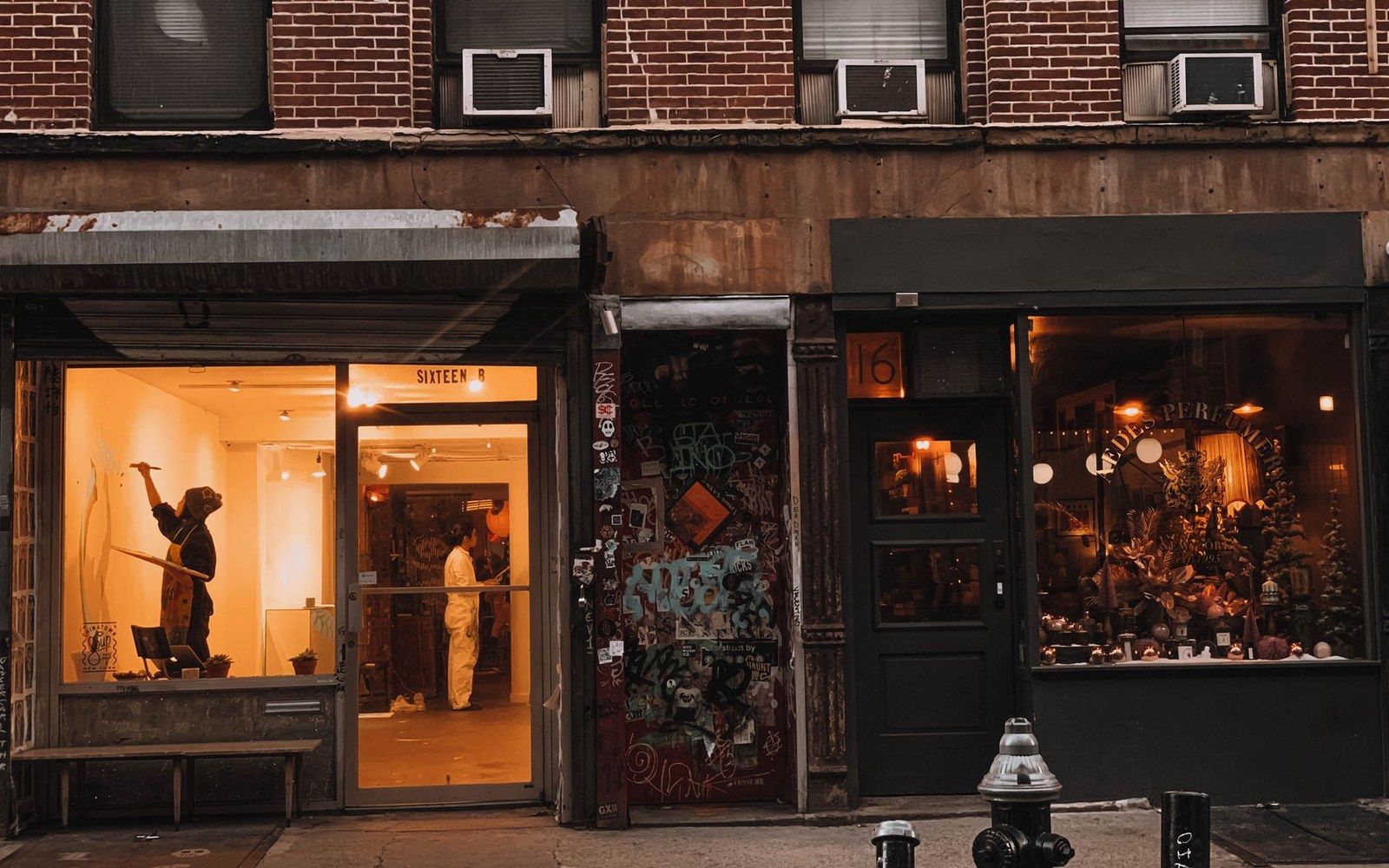
Thursday openings put a whole district on the same pavement for two hours.
Photo: Renato Athayde / Pexels
The Logic of Multiple Floors, Multiple Buildings
A single Chelsea space was never the plan. Within a few years Gagosian had taken a second Chelsea address on West 21st Street, then expanded again on West 24th, effectively occupying more than one building on the same block. The strategy mirrored what his gallery was doing internationally — London's Britannia Street in 2000, Rome, Paris, Hong Kong — but the Chelsea footprint made the logic concrete in a way a global map could not. Each New York space could run a separate exhibition simultaneously, allowing the gallery to hold a Cy Twombly retrospective in one room and a new-production Jeff Koons commission in another without either show shrinking to accommodate the other.
That freedom to programme at scale — to hang the largest canvases Gerhard Richter or Richard Serra had made, to accommodate sculptural work that would have been impossible in a townhouse — was the direct argument for Chelsea's converted industrial stock. Ceiling heights in the West 24th Street building run to roughly twenty feet. The floor loads, engineered for manufacturing, can bear bronze. No Upper East Side building offered comparable conditions.
- 1989Gagosian opens at 980 Madison Avenue, Upper East Side
- 1999555 West 24th Street, Chelsea: first West Chelsea space, converted garage, approx. 8,000 sq ft ground floor
- 2000London's Britannia Street space opens, first major international expansion
- Mid-2000ssecond and third Chelsea addresses on West 21st and West 24th Streets operating simultaneously
Programme Decisions at Scale
The expansion was not only architectural. Running multiple large rooms simultaneously required Gagosian to operate less like a traditional dealer — one director, one programme, one room — and more like an institution with a curatorial staff distributed across spaces. The gallery's ability to mount museum-scale exhibitions of artists such as Cy Twombly, whose retrospective MoMA organised in 1994, positioned Gagosian as a venue serious lenders would consider. The gallery mounted its own Twombly exhibitions in Chelsea that rivalled in ambition what publicly funded spaces could assemble.
980 Madison Avenue was not abandoned in this expansion — it continued as the Upper East Side outpost, handling works for collectors who would never cross into Chelsea and reinforcing the gallery's secondary-market credibility. The dual geography, Uptown and West Chelsea running concurrently, was itself a statement: Gagosian did not move so much as replicate.
A single Chelsea space was never the plan.
By the mid-2000s the Chelsea cluster — multiple addresses within a short walk of each other on West 21st and West 24th Streets — had turned one gallery into something closer to a neighbourhood institution. The effect on surrounding blocks was measurable: neighbouring galleries on West 24th Street benefited from the foot traffic Gagosian drew on opening nights, even as smaller dealers found the rent pressure those same openings helped generate increasingly difficult to absorb. One dealer's expansion, in other words, simultaneously animated and strained the district it anchored.
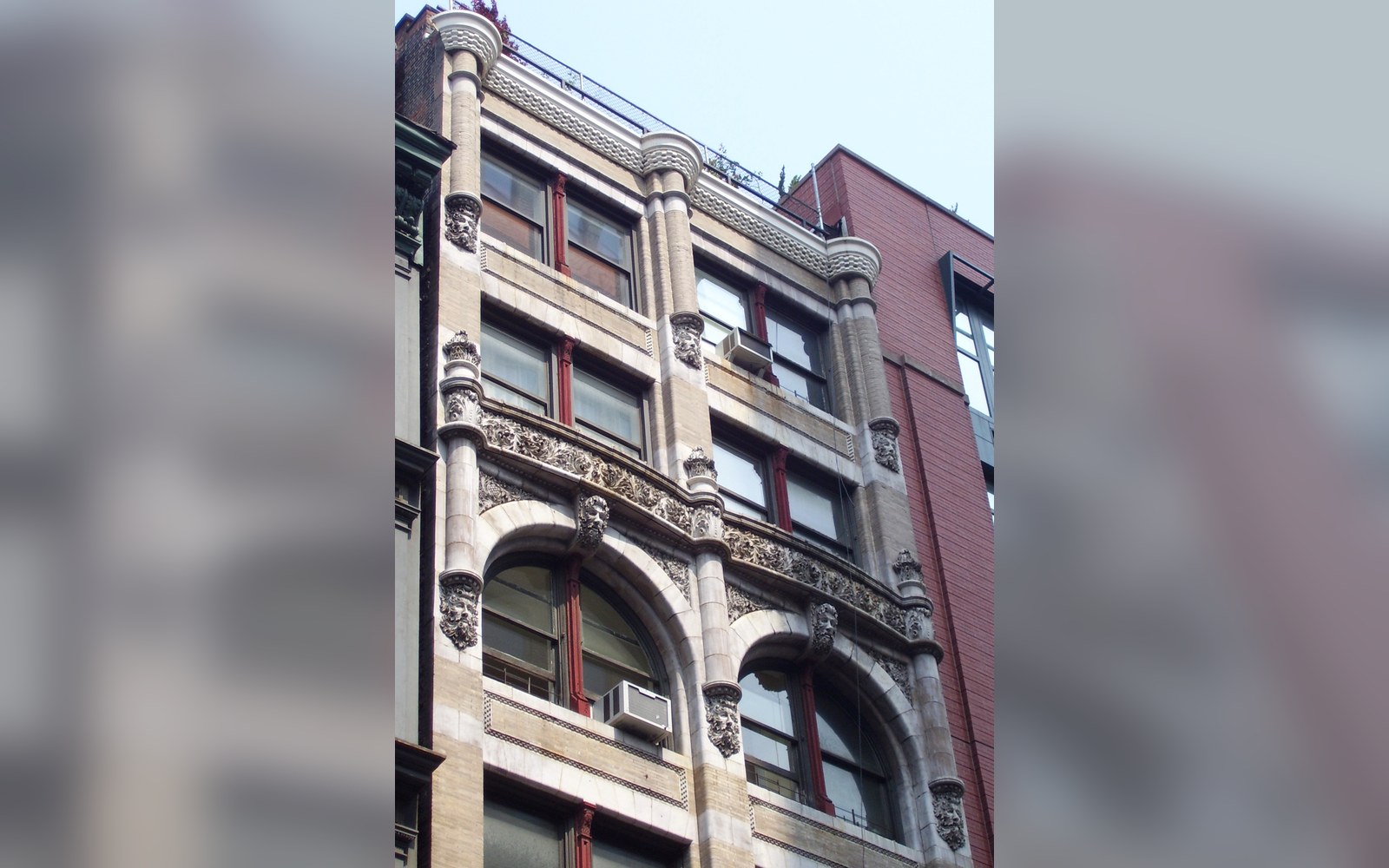
Elsewhere in Chelsea: Paula Cooper Gallery at 534 West 21st Street, 1996 — the ceiling height and floor plate that Prince Street could not offer. From Prince Street to West 21st
Photo: 169 Mercer Street top · Wikimedia Commons
| 980 Madison Avenue | Upper East Side flagship, opened 1985, continued alongside Chelsea expansion |
|---|---|
| 555 West 24th Street | first Chelsea address, opened 1999 |
| West 21st Street, Chelsea | subsequent New York space, overlapping programme with West 24th |