Gladstone on 21st Street
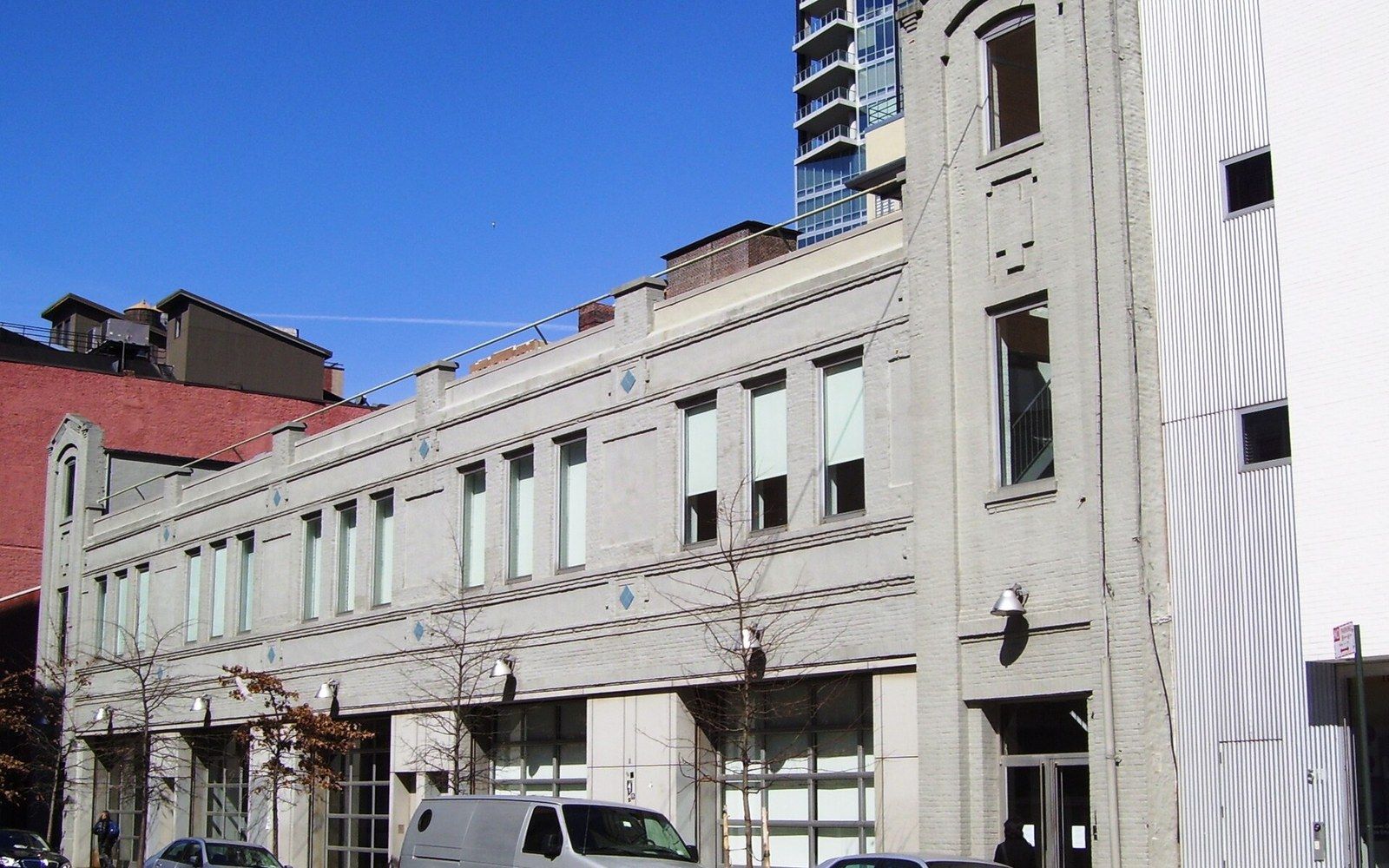
Gladstone Gallery on West 21st Street, the industrial room taken by a dealer who had shown Matthew Barney since the early 1990s.
Photo: 513 West 24th Street · Wikimedia Commons
A Dealer Who Moved When the Neighbourhood Did
Barbara Gladstone opened her first gallery in 1979 on West 57th Street, carrying a program grounded in Conceptual and video-based work before those terms had hardened into categories. By the mid-1980s she had relocated to SoHo, operating on West Broadway at a moment when that corridor still set the tempo for contemporary art in New York. When SoHo began its slow turn toward fashion retail in the mid-1990s, Gladstone read the shift early and moved west with the generation of dealers who were converting Chelsea's loading docks and parking garages into the city's next gallery district.
Her West Chelsea presence coalesced around two addresses that together gave the gallery the kind of physical scale that its program had long demanded. The space at 515 West 24th Street, the gallery's principal Chelsea room, offered the high ceilings and clear-span floor area that had drawn the first dealers to the neighborhood in the early 1990s. A second space at 530 West 21st Street extended the operation, giving Gladstone the flexibility to run concurrent exhibitions of significantly different scales, a practical necessity for a roster that moved between photography, large-format video installation and monumental sculpture.
Outside the city the same trade needs acreage, and a figure in the frame is the only way to show it.
Photo: Maurice Engelen / Pexels
Matthew Barney and the Argument for Space
The case for why Gladstone needed industrial room begins with Matthew Barney, whom the gallery had begun representing in the early 1990s. Barney's Cremaster cycle — the five-film project completed in 2002 that remains one of the most ambitious bodies of work produced by any artist associated with the gallery — demanded projection rooms, sculptural vitrines, and the kind of ceiling height that a 19th-century loft simply cannot provide. Showing even individual components of that cycle, as Gladstone did across multiple exhibitions, required a space that could absorb scale without theatrical compromise. Chelsea's former industrial buildings, with their freight-grade floors and column-free interiors, answered that requirement in a way that West Broadway never fully could. The Cremaster cycle's physical demands on exhibition design were well documented when the Guggenheim presented a survey of the work in 2002–03.
That logic — program shapes building, building enables program — runs through the history of every significant Chelsea relocation, but it is unusually legible at Gladstone because the gap between what her artists made and what SoHo could hold had grown so visible by the late 1990s. Richard Prince, Rosemarie Trockel, Rikrit Tiravanija, and later Rachel Harrison and Marilyn Minter all showed at the gallery during its Chelsea years, each bringing distinct spatial requirements that the two-address model helped accommodate.
| 515 West 24th Street | Gladstone's principal Chelsea exhibition space |
|---|---|
| 530 West 21st Street | secondary Chelsea space used for concurrent programming |
The 24th Street Block in Context
By the time Gladstone was established on West 24th Street, that block had become one of the densest concentrations of serious gallery real estate in the world. Matthew Marks had taken 523 West 24th Street in 1994, effectively opening the block to gallery tenancy; Gagosian followed at 555 West 24th with a space whose square footage signaled unmistakably that Chelsea was operating at a different commercial register than SoHo had ever reached. Gladstone's presence on the same block placed her among the handful of mid-sized dealers — large enough to commission ambitious installations, small enough to maintain genuine curatorial coherence — who gave West Chelsea its critical texture in the years between the neighborhood's opening and the arrival of the art fairs that would eventually reshape the selling calendar.
The gallery's architecture was direct: white walls, concrete or polished floors, the deliberate absence of ornament that had become the period's lingua franca for serious contemporary space. What distinguished Gladstone on 24th Street was less the room itself than the sequence of exhibitions that filled it — work that consistently asked the space to behave as something closer to a film set or a field condition than a neutral container.
The case for why Gladstone needed industrial room begins with Matthew Barney, whom the gallery had begun representing in the early 1990s.
Barbara Gladstone's move into West Chelsea was neither early nor late; it was precisely timed to the moment when the neighborhood had enough institutional mass to support serious program but had not yet become expensive enough to crowd out ambition. That calibration — reading the city's gallery geography as a set of pressures and opportunities rather than fixed addresses — is the discipline that has kept the gallery central across four decades and three districts.
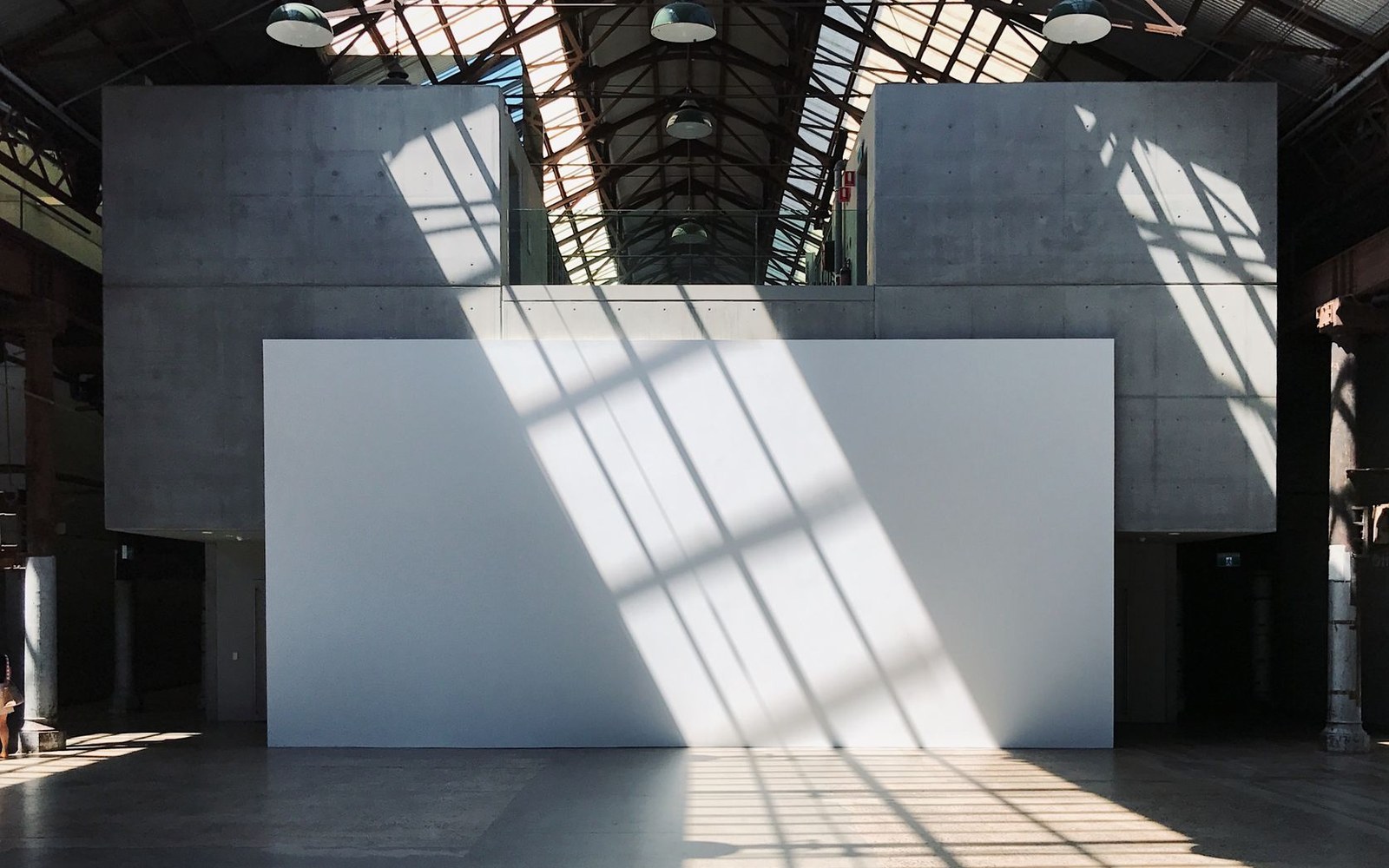
Elsewhere in Chelsea: Hauser & Wirth on West 18th Street, in the former Roxy nightclub — one of the largest commercial exhibition spaces in the city. Hauser & Wirth Takes the Roxy
Photo: Gilberto Olimpio / Pexels
- 1979Barbara Gladstone Gallery founded, West 57th Street
- Mid-1980srelocation to SoHo / West Broadway
- Mid-to-late 1990smove into West Chelsea; 24th and 21st Street spaces established
- 2002Matthew Barney's Cremaster cycle completed; Guggenheim survey exhibition