Patti Astor and the Fun Gallery on East 10th
The storefront that turned spray-can culture into a commercial proposition — and did it first.
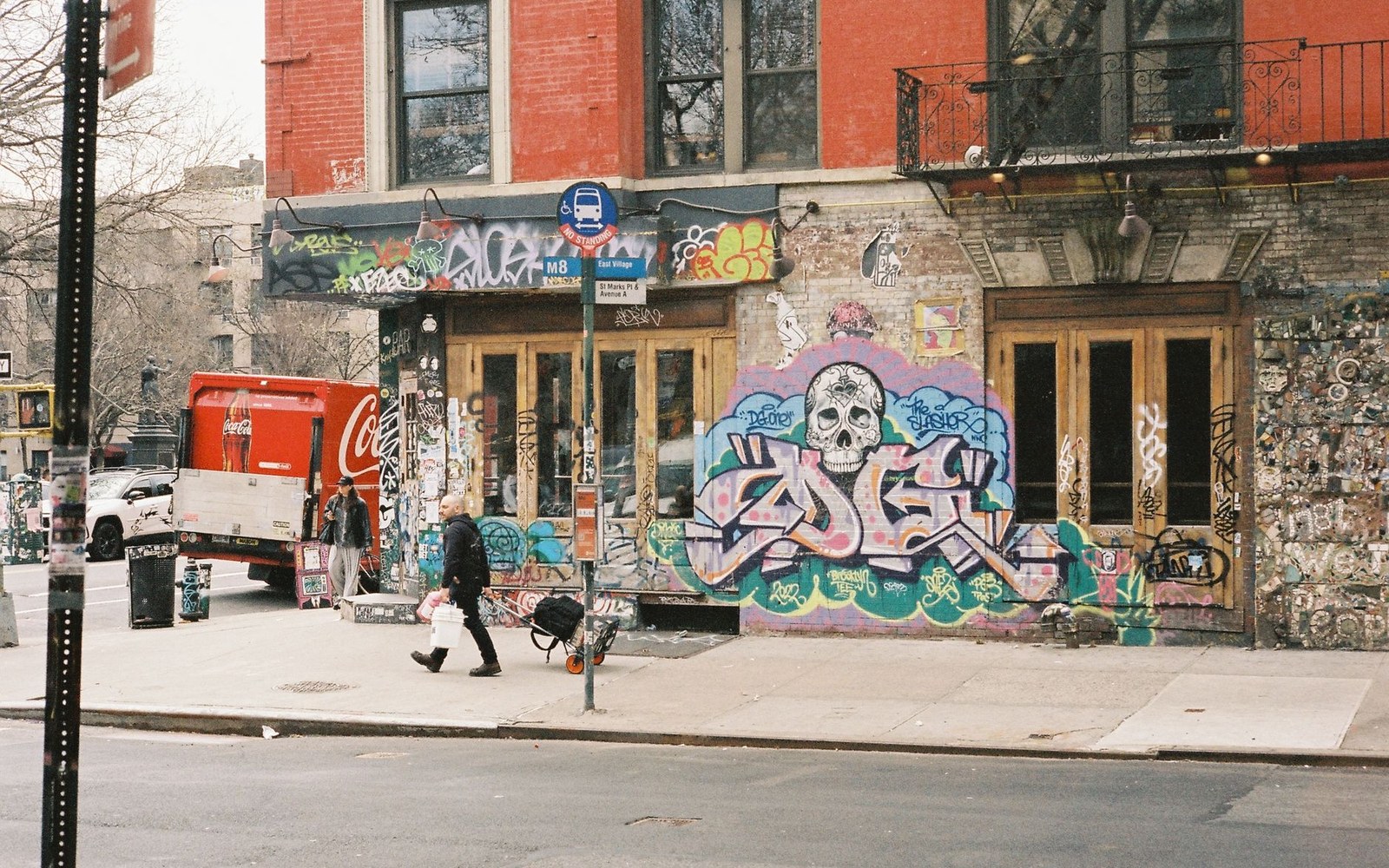
The Fun Gallery, 254 East 10th Street, opened 1981 — the first commercial storefront to hang Futura, Lee Quiñones and Basquiat.
Photo: Alec Doualetas / Pexels
A Room on East 10th, a Scene Without a Venue
When Patti Astor and Bill Stelling opened the Fun Gallery at 254 East 10th Street in 1981, the East Village had plenty of energy and almost no infrastructure to hold it. Astor was a downtown actress and scenester; Stelling was her business partner. Neither came from the gallery trade, and that was the point. The Fun Gallery was built around a moment — specifically, around the graffiti writers, breakdancers and rappers whose work was filling subway cars and handball courts but had found no permanent commercial home.
The space itself was a modest storefront, the kind of low-rent ground-floor room that defined the East Village gallery moment of those years: short leases, thin walls, heat optional. What Astor and Stelling supplied was curatorial nerve and a genuine social connection to their artists. They did not recruit from art schools. They recruited from the street.

The back office is where a district is actually run: leases, shipping schedules and the artists’ accounts.
Photo: Nic Wood / Pexels
The Artists and What They Brought
The Fun Gallery's early exhibitions introduced Futura — then working as Futura 2000 — and Lee Quiñones to a paying audience for the first time in a commercial setting. Both had built reputations in the city's graffiti underground: Quiñones through large-scale handball-court murals in the Lower East Side, Futura through a distinctive abstract style that owed something to Abstract Expressionism and nothing to any academy. The gallery stretched a canvas or hung a board, and work that had previously existed on public surfaces was suddenly priced and sold.
Jean-Michel Basquiat showed at the Fun Gallery in 1982 and 1983, by which point he was already attracting attention from larger dealers. The Fun Gallery did not hold him — the market was moving too fast — but it was among the first rooms where his paintings were seen in a commercial context, before Mary Boone and others arrived with bigger budgets and longer reach. Basquiat's trajectory out of the East Village and into SoHo and 57th Street illustrated exactly how the Fun Gallery functioned: as a first room, not a permanent home.
- 1981Fun Gallery opens at 254 East 10th Street, East Village
- 1982–83Jean-Michel Basquiat exhibitions at the gallery
- 1985Fun Gallery closes
The program also included Kenny Scharf, whose cartoon-saturated canvases connected the graffiti aesthetic to Pop and to the broader Downtown art scene. The gallery held rap performances and DJ sets alongside openings, making the vernissage — the opening-night preview — indistinguishable from a party in the best sense: the crowd was the subject and the art was on the walls.
Why It Ended in 1985
The Fun Gallery closed in 1985, four years after it opened. The reasons were structural and financial rather than curatorial. The same success that validated the gallery's program also priced it out of its own ecosystem: artists who showed at Fun were absorbed by galleries with more capital, better storage and established collector networks. The East Village boom was generating more galleries than the neighborhood's collector base could support — by some counts more than a hundred venues opened between 1981 and 1985 — and the attrition rate was high across the district.
Astor had also made the gallery's identity inseparable from her own persona and from a specific cultural moment. That was a strength in 1981 and a liability by 1984, when the graffiti art market that the Fun Gallery had helped create was being absorbed by better-capitalized operations uptown and in Europe. The storefront on East 10th could not compete on those terms and did not try.
The Fun Gallery's early exhibitions introduced Futura — then working as Futura 2000 — and Lee Quiñones to a paying audience for the first time in a commercial setting.
What the Fun Gallery left behind was a precedent: the demonstration that work made outside the gallery system — on walls, trains and handball courts — could enter that system on its own terms, at least briefly, and command a market. The dealers who came after it, in Chelsea and beyond, inherited that assumption without always acknowledging where it came from.
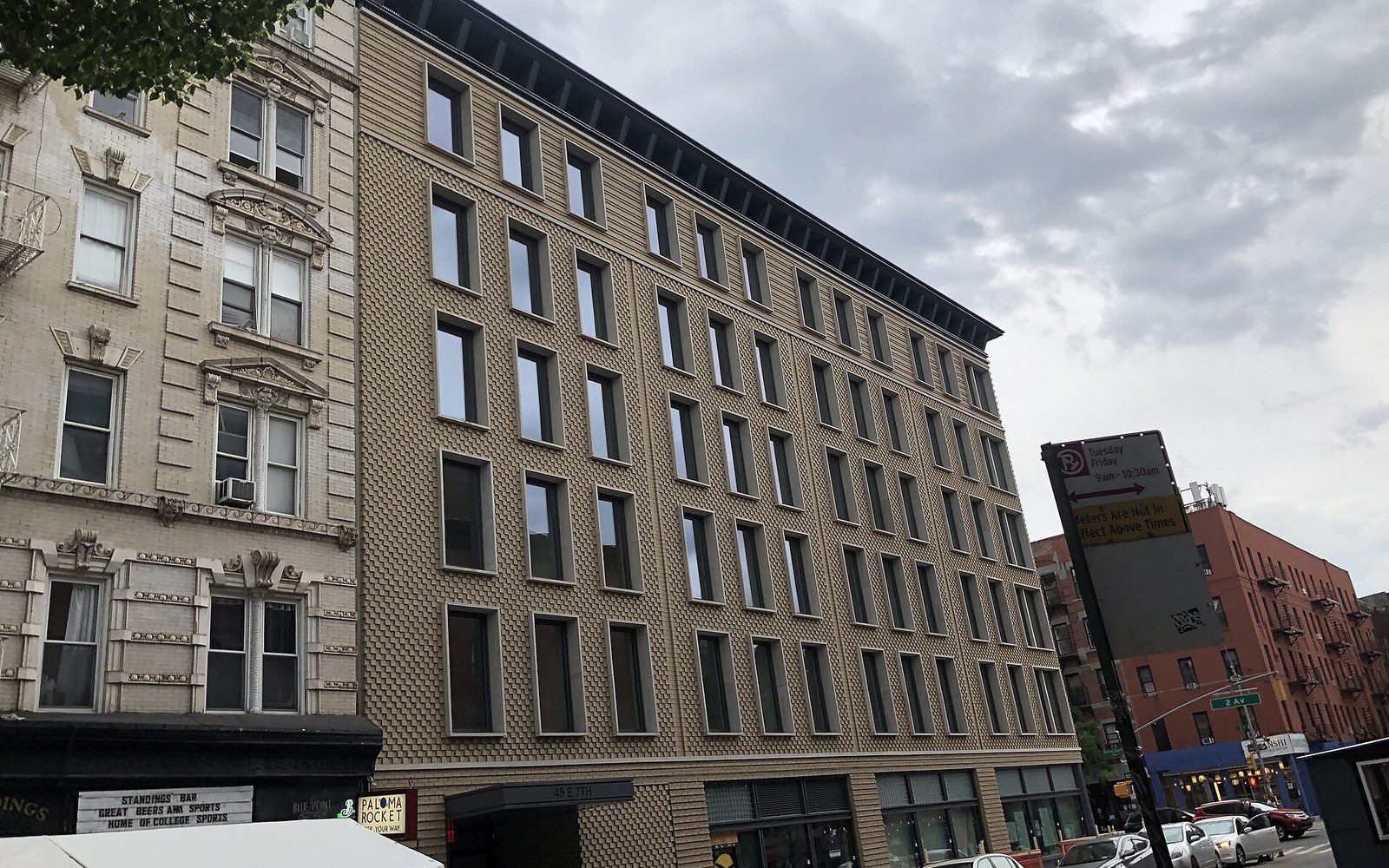
Elsewhere in East Village: International With Monument, East 7th Street, 1983–1988 — the storefront that showed Koons, Halley and Vaisman. International With Monument and the Ironic Storefront
Photo: 45 East 7th Street EV · Wikimedia Commons
| Patti Astor | co-founder, public face, downtown actress and scenester |
|---|---|
| Bill Stelling | co-founder, business operations |
| Futura (Futura 2000) | graffiti artist, early exhibitor; abstract style rooted in subway-car painting |
| Lee Quiñones | graffiti muralist from the Lower East Side, shown commercially for the first time at Fun Gallery |
| Jean-Michel Basquiat | shown 1982–83; moved to larger galleries shortly after |
| Kenny Scharf | exhibitor; connected graffiti aesthetic to Pop idioms |